
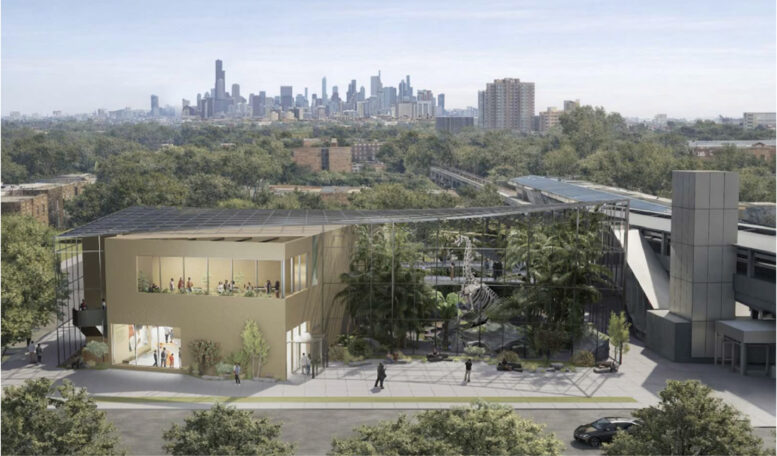
Detailed plans have been revealed for a brand new science-based community hub and museum to be known as Scitopia in Washington Park. Located at 300 East Garfield Boulevard on the corner with South Prairie Avenue, the proposal would replace a large vacant lot next to the CTA Green Line Garfield station along with the upcoming UChicago Lab Complex.
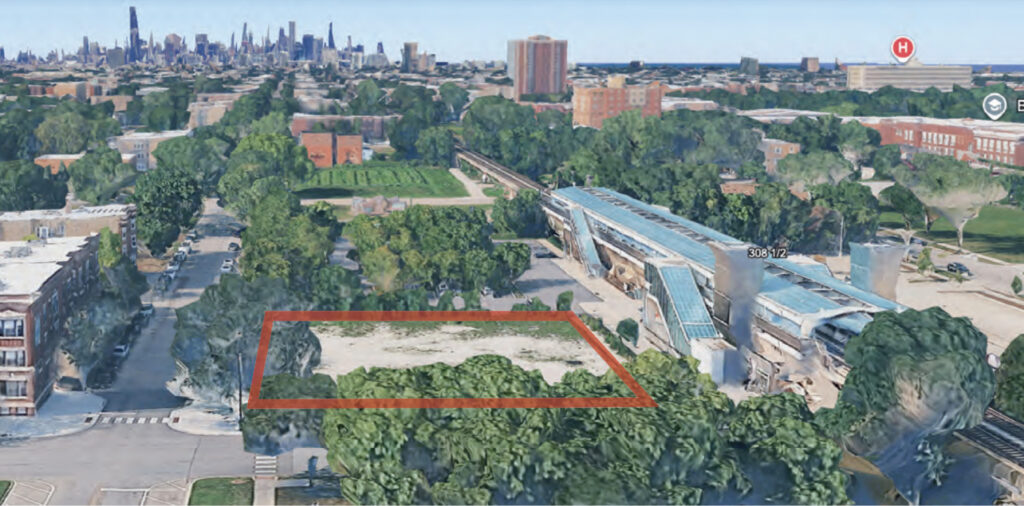
Site context map of Scitopia Chicago by APB
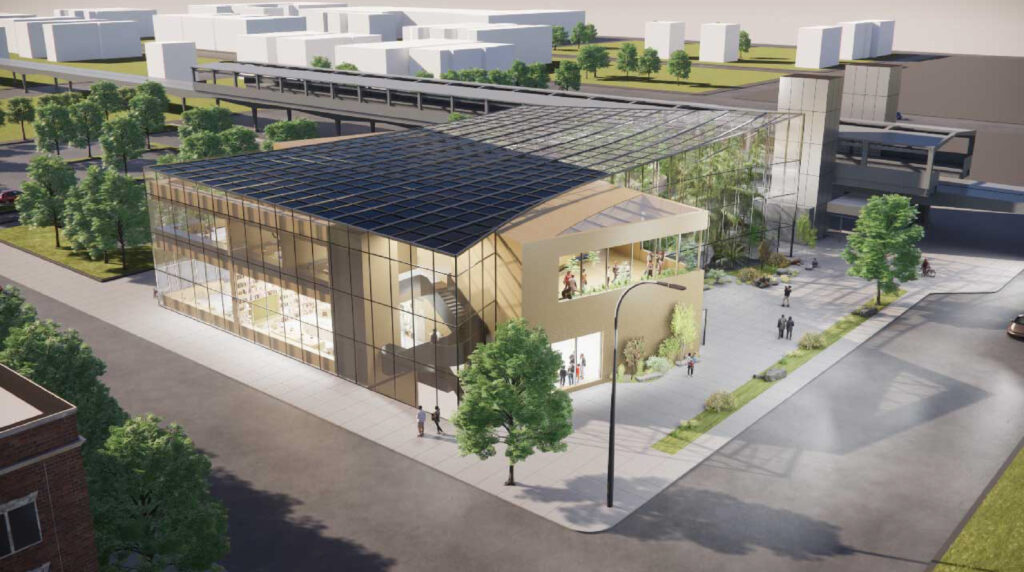
Rendering of Scitopia Chicago by APB
Efforts for the project are being led by the Scitopia Foundation and City of Chicago, along with funding partially through Oklahoma-based Whitten-Newman Foundation. The Scitopia foundation is led by a mix of UChicago professors along with local community leaders, who initially announced their plans to build the new teen-focused facility in the spring.
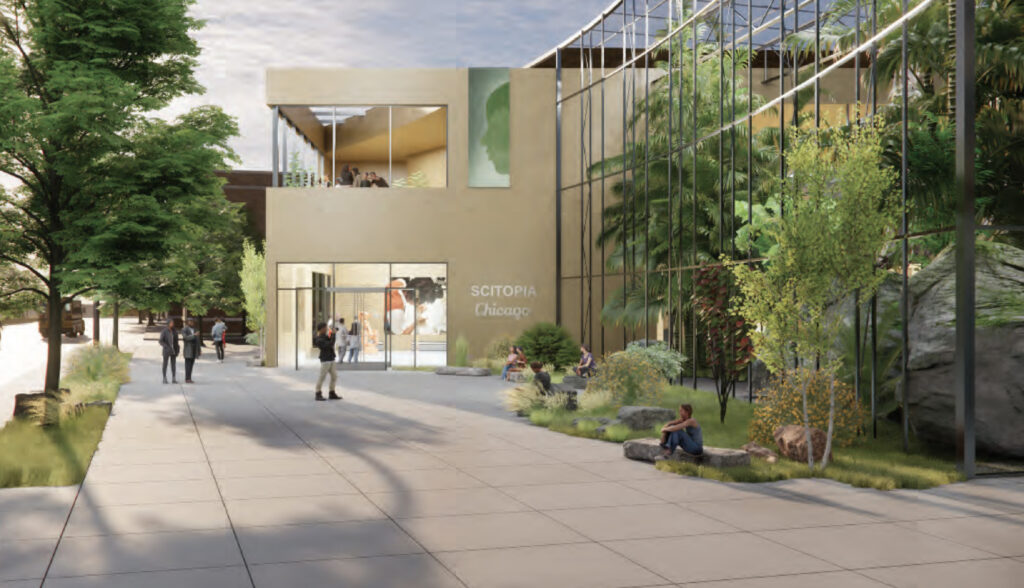
Rendering of Scitopia Chicago by APB
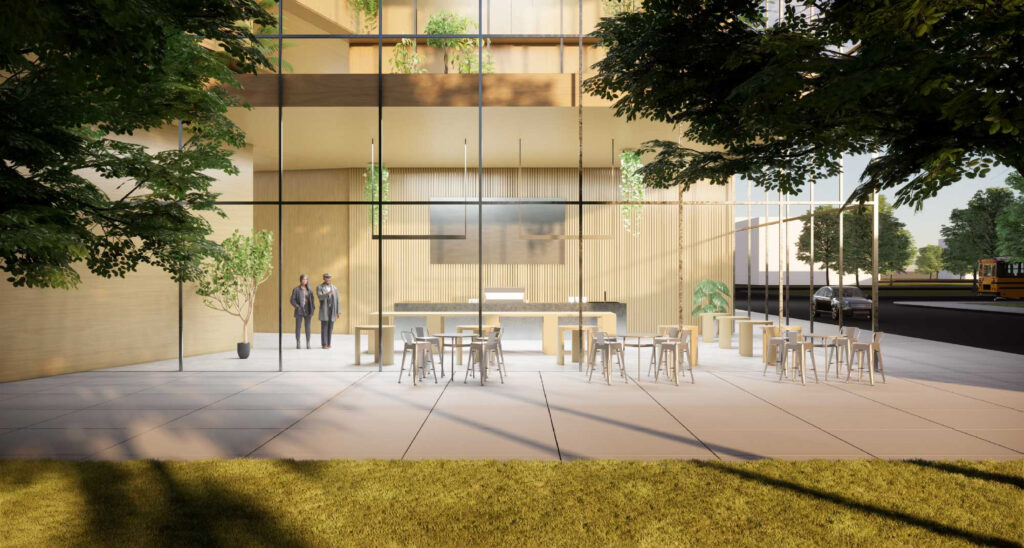
Rendering of Scitopia Chicago by APB
The two-story structure is being designed by local firm Architecture for Public Benefit, featuring a swooping glass ceiling anchored by a large-scale conservatory. The structure will be built out of cross-laminated timber with rooftop solar panels coupled with geothermal energy. This will allow the center to become the first carbon-neutral, net-zero-energy public science center in the world, per their presentation deck.
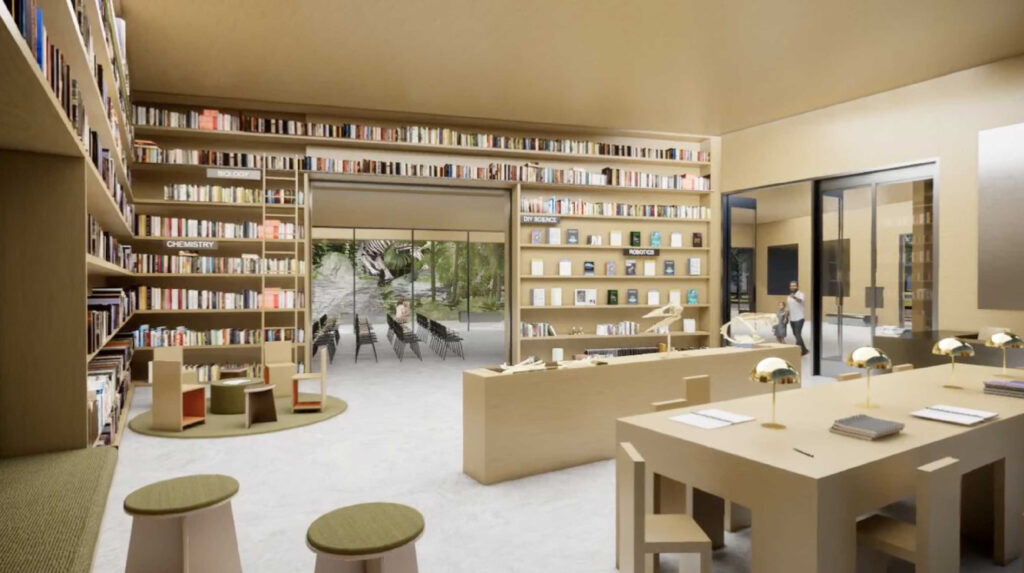
Rendering of Scitopia Chicago by APB
Surrounded by a small open plaza, the ground floor will be accessed via a large lobby bisected by an enclosed community exhibition/meeting space called Visions. Surrounding this will be a small cafe with terrace seating, a large teen lounge/library space called the Imaginarium, as well as the center’s central attraction within the double-height conservatory called Lost World.
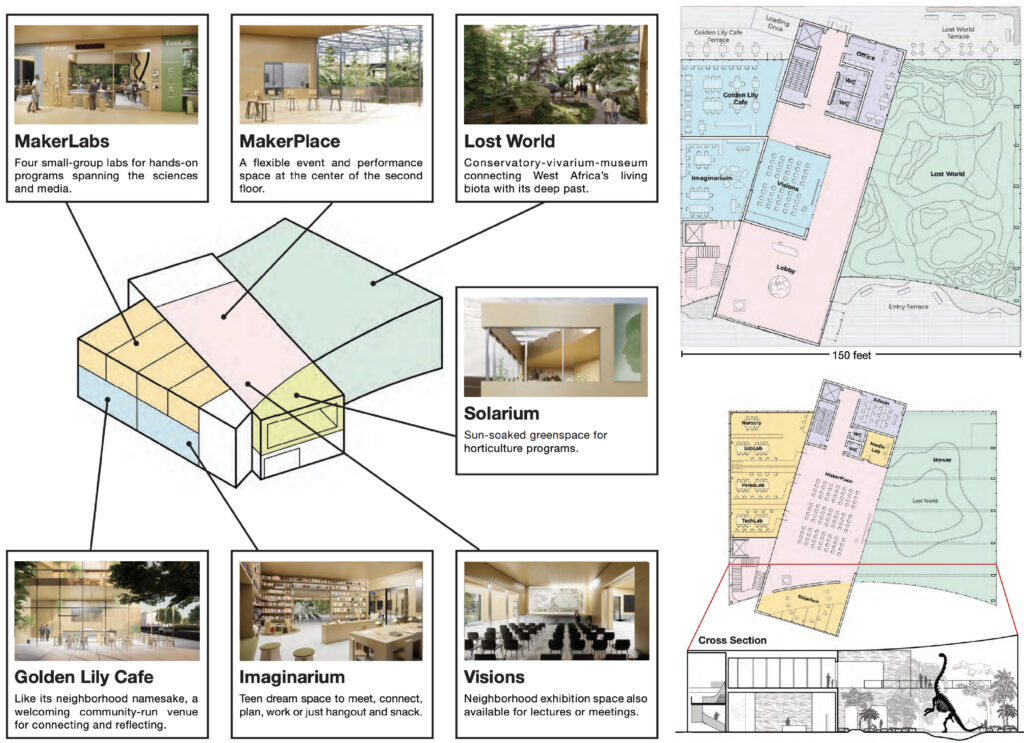
Plans for Scitopia Chicago by APB
Lost World will serve as a vivarium-museum space focusing on the flora and fauna of West Africa. This includes 10 unique plants, four animal exhibits/habitats, and fossils of five different dinosaurs who roamed the region. Guests will also be able to view the space through an undulating second-floor skyway.
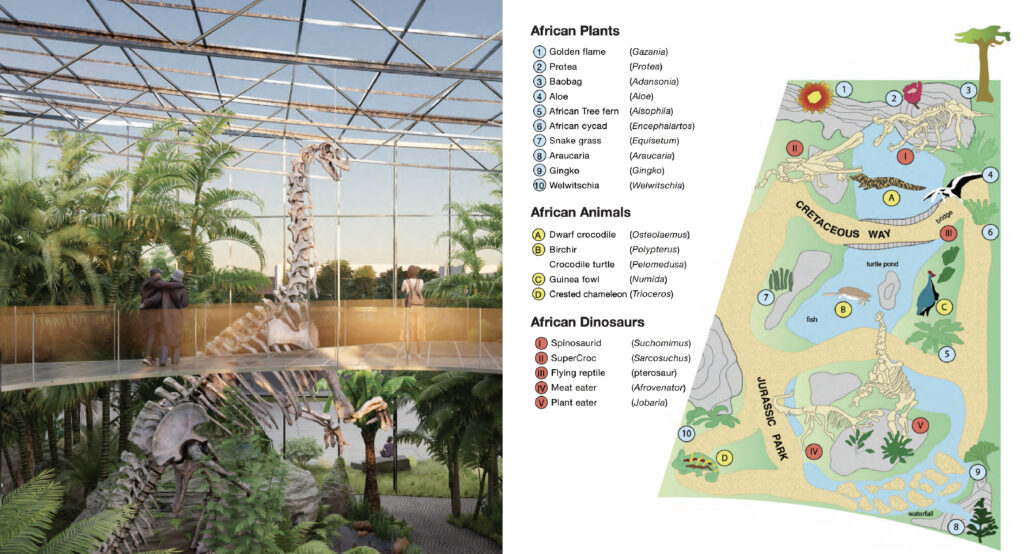
Plans for Lost World by APB
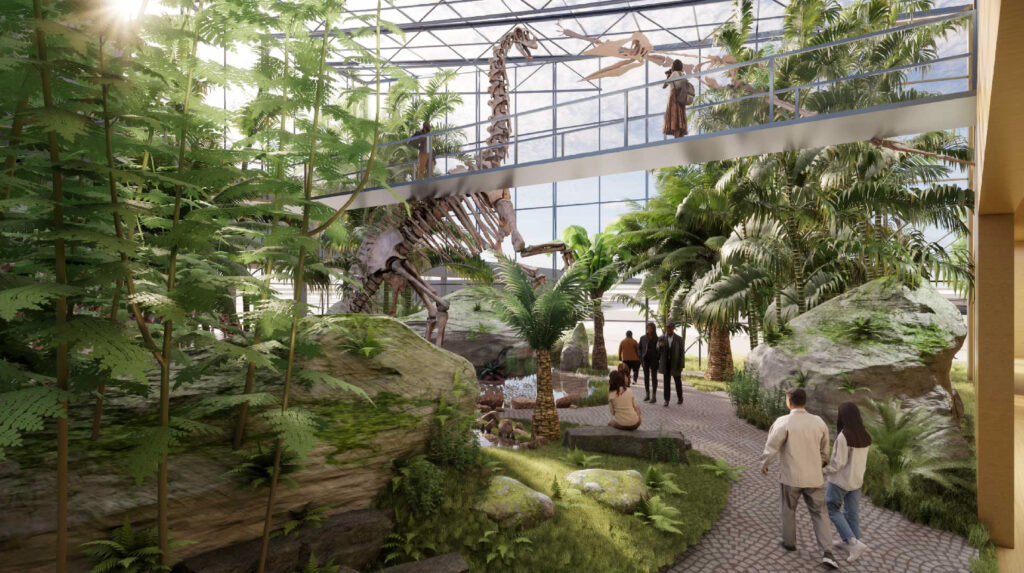
Rendering of Scitopia Chicago by APB
The second-floor lobby area will be known as the Makerplace, a community-focused event space. This will directly connect to four small labs known as the Makerlabs. These will focus on plant nursery, ecology, paleontology, and technology. A small media lab, office space, and large solarium will round out the rest of the building.
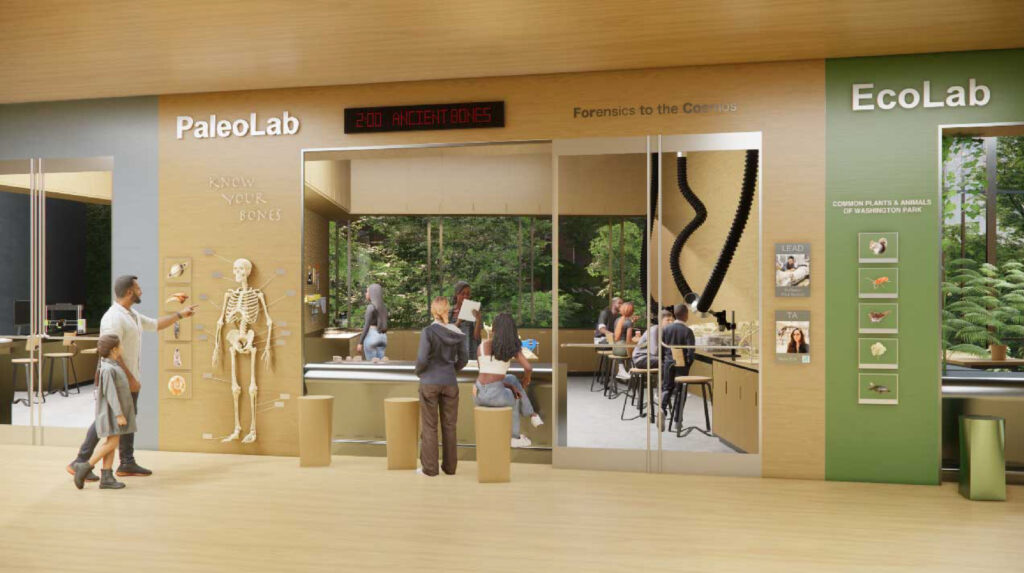
Rendering of Scitopia Chicago by APB
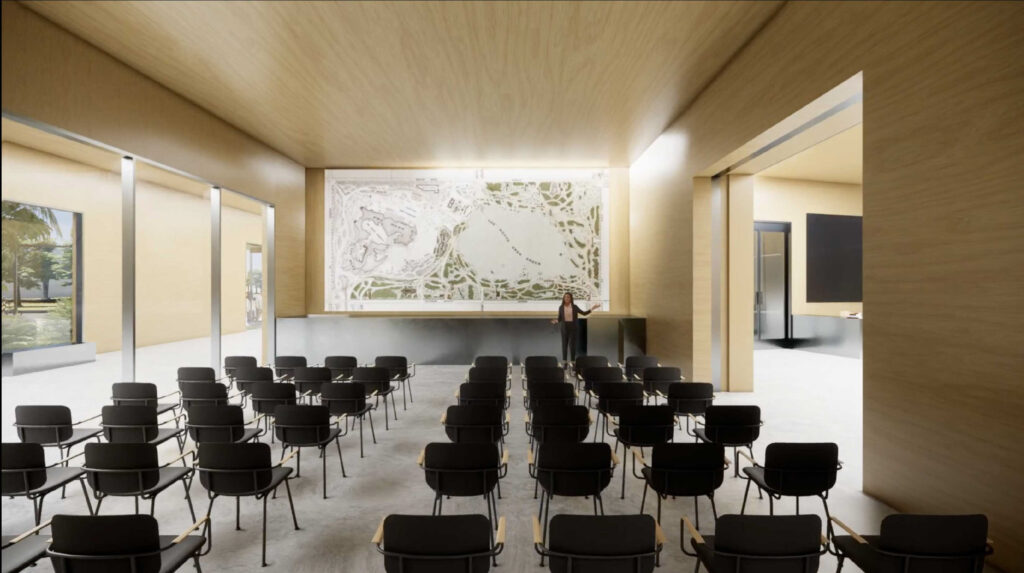
Rendering of Scitopia Chicago by APB
Scitopia is looking to offer hands-on learning through co-locating multiple cultural components that normally don’t share a space. The space will be free for visitors and offer various programs for local youth and adults through neighboring organizations. The $50 million center plans to begin construction in January 2028, with a mid-2029 opening date.
Subscribe to YIMBY’s daily e-mail

Follow YIMBYgram for real-time photo updates
Like YIMBY on Facebook
Follow YIMBY’s Twitter for the latest in YIMBYnews
Love this type of utilization especially near such a major corridor like 55th and MLK
This is a prime site for much needed high density housing, next to transit. Kinda funny that we spend billions to extend transit lines to far-flung residential areas, and then turn existing residential areas along existing transit lines into non-housing uses.
That’s because there is little demand to live in these places, and little ROI for private developers (because of the little demand), hence the only things that get built here are either housing that is heavily subsidized by Government/non-for-profits or stuff like this
That is just categorically untrue if you have been paying attention to the articles on this website about the 2 and 3 flats being built along the south side green line.
I just paid a streetview visit of this site now.
Yeah, this area is booming. Mmmmhmmmm……..
Yes that is true, and the city, county, and state all would benefit from attracting additional housing specifically along rapid transit corridors. It widens the property tax base, and strengthens the transit system by bringing more fare value. Plus it addresses pollution and helps mitigate traffic congestion. While there is little demand or incentive to live in places like this, I think there are many reasons to reasonably incentivize developers to specifically build more housing along rail corridors. Zoning and “cut the red tape” initiatives are a start.
Almost like you need both residential and non-residential amenities in some of these areas. There is still plenty of space, including city owned lots, within walking distance of this location to build residential units. Places like these only help to improve the lives of the existing residents and help spur construction on the remaining lots for even more housing.
Like this, like the external funding and the draw for the general public. Its a good use for a lot next to a noisy CTA station. There’s a lot of empty lots around that CTA station for high density housing, so not worried about that.
We definitely need high density housing around transit. But having grown up in this area 40+ years ago, I gotta say this project looks amazing as well! If I were the boss we’d limit parking for cars at this development as much as possible, especially as new transit funding and significantly improved CTA service will be in full swing by the time this thing’s built. If people are riding bikes and transit to this very central location, this development would truly be a great step in a great direction for the area.
There’s a huge vibe shift between Hyde Park and the Green Line station, so kudos to the UChicago group that is doing something tangible to push quality-of-life, cultural and community projects further west.
All CTA stations on the south and west sides should be granted TIFs and special powers to coordinate development with every tax and zoning advantage imaginable. This includes organizing their own security arrangements by paying Chicago Police to do shifts exclusively in their areas and/or by creating their own security systems with their TIF money. The zones around CTA stops on the south and west sides should have almost the powers of independent municipalities so they can show what can be achieved without big commercial investors and the political power they have in Chicago city government to get advantages for their developments in the Loop and north side. It would lead to revolutionary growth and change in Chicago, change that many would be threatened by. In the end, large new areas of growth with rising property values and increased tax income for Chicago would spread the costs of public services more widely and build a stronger tax base. It won’t happen, but that’s the agenda I’d run on if I were a politician in Chicago.