
Late last year, Chicago YIMBY had the opportunity to sit down with the CEO of the Hispanic Housing Development Corporation (HHDC) to discuss their history, upcoming projects, and the complexities of affordable housing. This piece will also cover one of our most frequently asked questions: what drives the higher cost of affordable housing?
HHDC is one of the largest community development organizations in the nation, with a focus on building within predominantly Latino neighborhoods in Chicago and beyond. The organization started in 1975 to try to combat the effects of disinvestment and help stabilize local communities while giving residents access to resources like jobs, healthcare, and education.
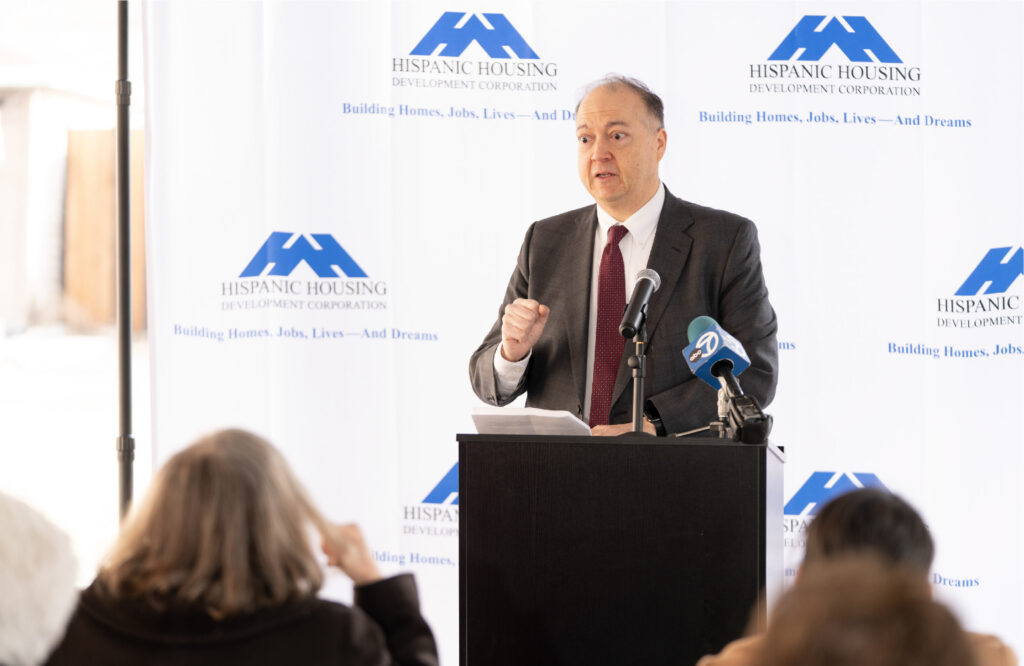
Image of Tony at groundbreaking of 1539 N Pulaski via HHDC
Over the years, HHDC has built or improved more than 4,630 homes, including apartments, condos, and single-family housing. CEO Tony Hernandez has been at the helm of HHDC since September 2024. During this time he’s continued to expand HHDC’s reach downstate, to Wisconsin, Michigan, and even Puerto Rico. However, his history with housing began in 1992.
As we progress through the article, interview questions will be in bold, answers from Tony will be italicized, and information on projects will be in standard font.
Tell me about your career path and work at HHDC?
I (Tony) started working at the Greater North-Pulaski Development Corporation in 1992 in Humboldt Park, not too far from our project at the Pioneer Arcade. Similar to HHDC it grew out of a need for resources in a quickly changing area. There, I worked on mostly economic development projects. After spending many years in affordable housing finance, it is great to come back to Humboldt Park with HHDC.
What is the mission of HHDC?
Our goal is to help people achieve their American Dream by providing the housing needed to succeed, regardless of where they are in life. Once we help them secure a home, they can proceed to secure employment, education, and provide for their families. We allow residents to remain in their neighborhoods and achieve their dreams as socioeconomic conditions change.
Similarly, with our senior projects, we provide residents with the opportunity to remain in the communities they have grown old in while offering access to on-site services and fully accessible units. We build and manage our own properties with a resident-focused approach, a model we have refined in Humboldt Park and are partnering with others to expand nationally.
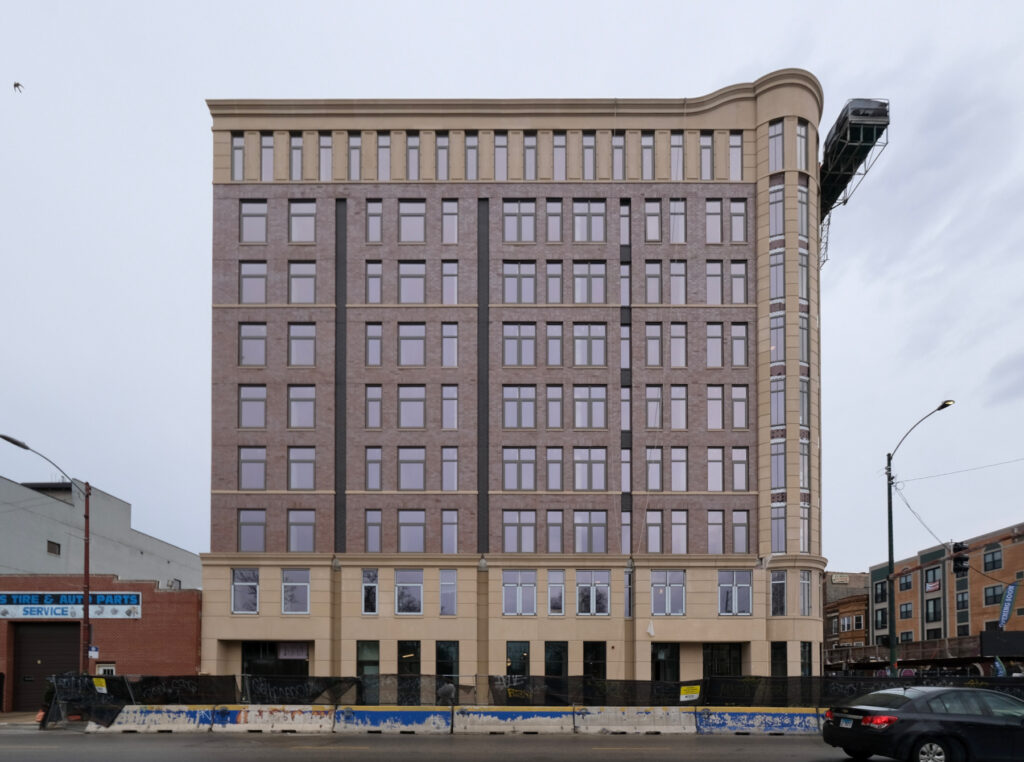
Pedro Albizu Campos Apartments. Photo by Jack Crawford
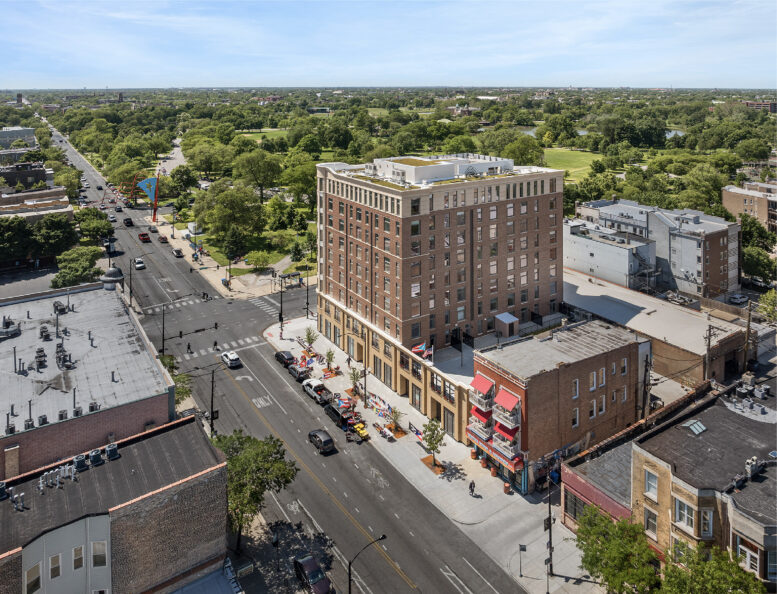
HHDC has been busy in the last few years in Humboldt Park. One of their most prolific properties has been 1203 North California Avenue, at the intersection of Paseo Boricua and the neighborhood’s namesake park. The nine-story building was completed in 2024 and dedicated to Puerto Rican activist Pedro Albizu Campos.
The building is fully leased and contains 64 affordable units aimed at families, with over half of the units being three-bedroom layouts. It also includes a large community center, a small parking garage, and 3,200 square feet of commercial space. The $40 million project was largely funded via Low-Income Housing Tax Credits (LIHTC), along with loans and other sources.
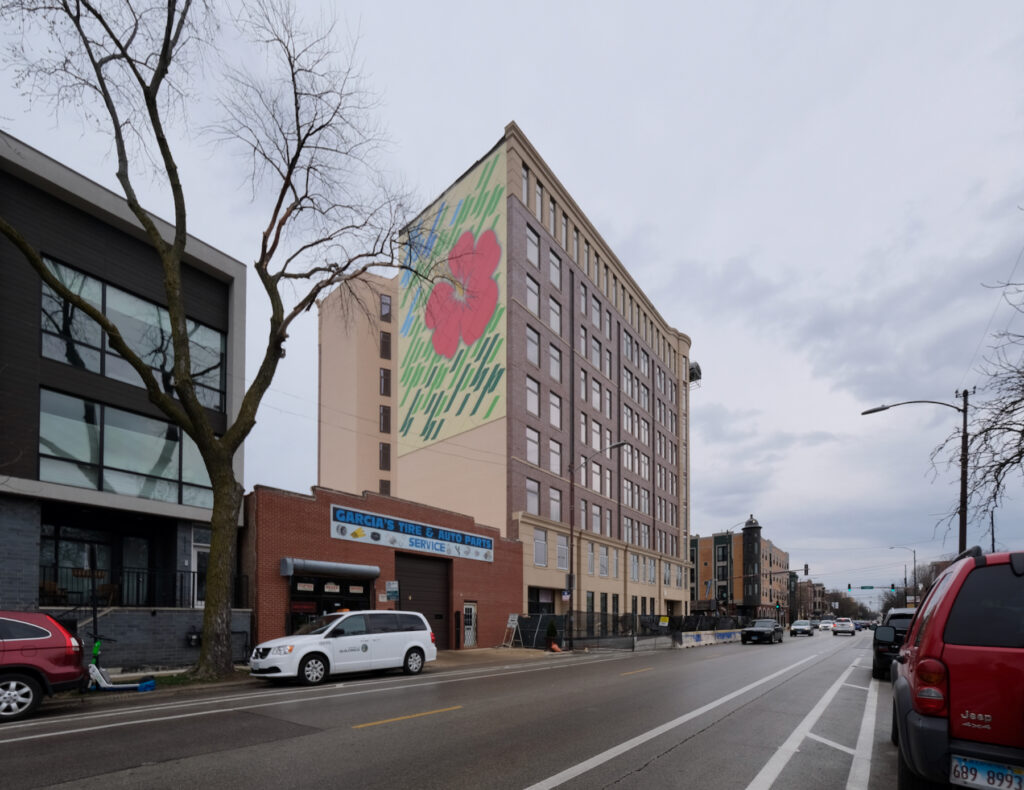
Pedro Albizu Campos Apartments. Photo by Jack Crawford
What has been the largest hurdle in developing affordable housing?
Currently, securing funding is probably the largest issue. It is difficult to get affordable projects to the table in the first place, and attracting capital to Chicago remains a challenge at the moment. We often depend on insurance companies and banks looking to reinvest money into communities. Funding timelines are also lengthy, with complex applications and many fees.
To pile onto that, the process of underwriting LIHTC has recently become more complicated nationally, and as a result, banks are being even more selective which limits what we can do. However, the city is working to simplify its portion of the application and oversight processes to help with timelines and get projects moving faster.
What drives the higher per-unit cost of affordable housing versus market rate?
Chicago faces a shortage of 120,000 affordable units, a number that continues to grow. Part of what drives the cost is the extended time it takes to develop projects, along with rising material and administrative costs as we move through the process. Since we are using incentives and government funding, we also take on more legal and soft costs, while paying taxes and security costs on the land during this.
Affordable housing in general has more stringent design requirements and is held to higher wage, labor, accessibility, and environmental standards than market-rate housing. Some credits, like the 9% credit, are scored based on factors such as providing additional amenities for residents. When you factor all of this in, as well as the years it can take to receive approvals, the cost of everything rises.
Additionally, due to the nature of our funding sources, we also cannot sell, refinance, or rehabilitate our buildings for 15 years. This is something we must factor in from the start and utilize higher-quality materials that can hold up over time. We also cannot increase rents while maintenance costs increase over the years, so we must account and include funding for said maintenance and repair costs at the start for more than a decade.
What is one way we can help mitigate this?
We must work on expanding what constitutes affordable housing to include the preservation of existing affordable units. We are currently doing so with 106 units scattered across the West Side. Preserving and rehabilitating these units will cost roughly half as much as new construction, provide long-term benefits to the community, and cost less to recapitalize later on.
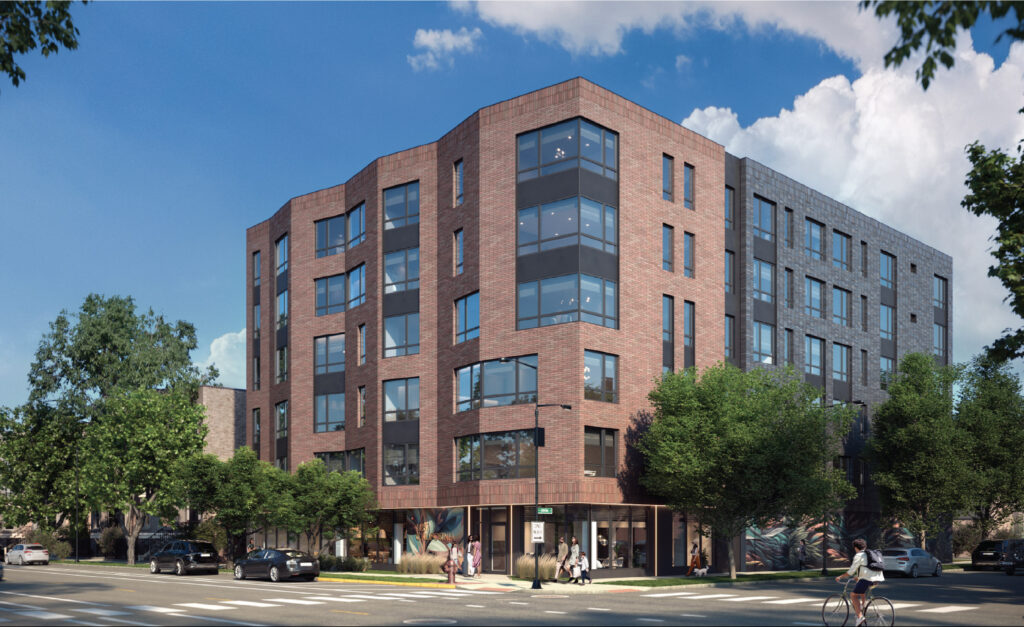
Rendering of 1237 North California Avenue by DesignBridge
With all of that in mind, HHDC continues to grow. Just up the street from the previous project, they are preparing to welcome residents to a new six-story development at 1237 North California Avenue. Inside its serrated facade are 40 units, over half of which are two-bedroom layouts, a common thread in these projects that do not feature studios and smaller units like market-rate developments.
The brick-clad building cost around $40 million to develop and build, featuring amenities such as a community room, business center, laundry room, and 21 parking spaces in the rear. At the moment, applications for the building are full and closed. As rents in the area continue to rise, affordable developments are seeing record application rates.
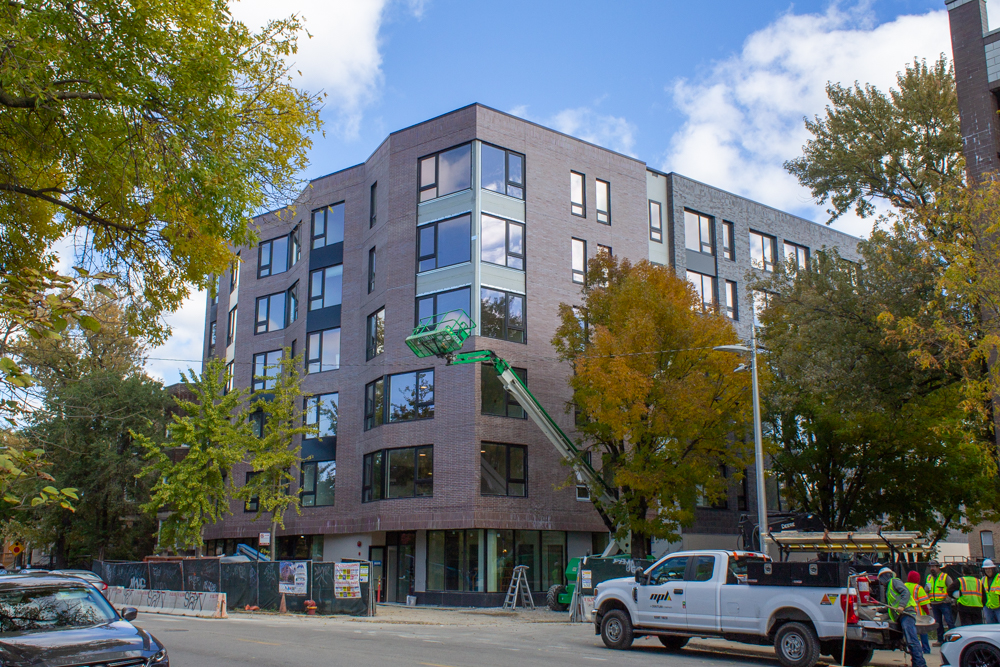
Photo of 1237 North California Avenue by Daniel Schell
What is the necessity for this typology? What impacts have you seen in the local community?
The work we do often takes a long time and can be frustrating, but every time we complete a project, we see a similar story. Recently, a mother told us that living in one of our buildings saved her life and gave her a place to raise her kids and feel safe. We also had an elderly couple who moved to Texas for affordability but had been on a waitlist for our senior projects for 10 years so they could return to the neighborhood where they were raised.
While performing site visits, we experienced a family getting their kids ready for school while overlooking the park. You could see the parents overjoyed that they were able to provide this for their children. All 277 employees here feel the same way—the hard work we do is worth it every day. But on a broader scale, we create economic activity, provide jobs, support local institutions, and push back against negative perceptions of our city. The peace we see in our residents makes it all worthwhile.
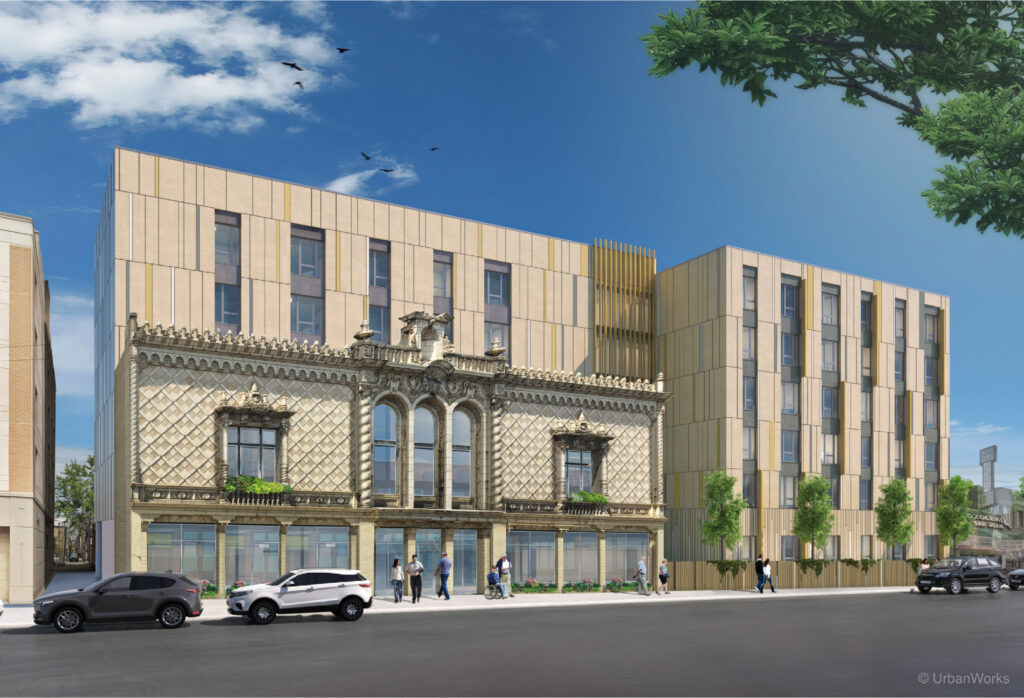
Rendering of Pioneer Arcade by UrbanWorks
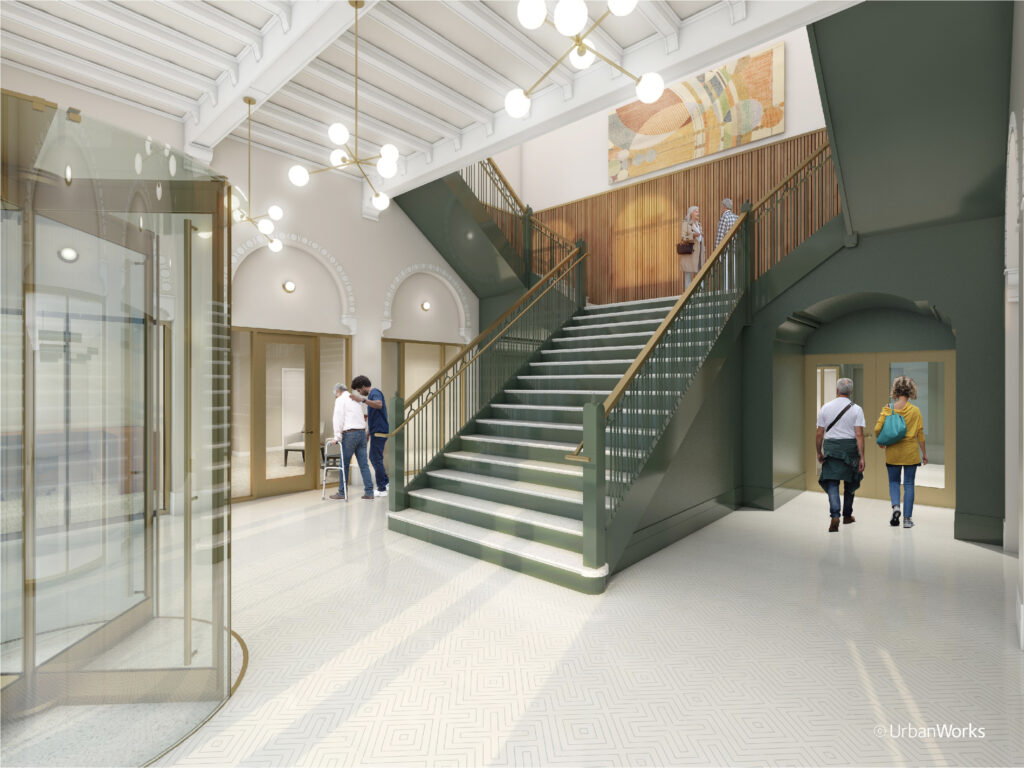
Rendering of Pioneer Arcade by UrbanWorks
In the face of a changing development market and gentrifying neighborhoods, the organization has just closed funding on the preservation and redevelopment of the former Pioneer Arcade into 61 senior housing units, a project years in the making. Additionally, HHDC has announced another nearby project at 3251 West Division Street with 44 units just this month.
Chicago YIMBY thanks Tony and everyone at HHDC for allowing us to take a peek behind the curtain and for sharing stories from their work. Keep a lookout for more interviews with developers this year.
You can read some of our previous interviews here:
YIMBY Interviews The Team Behind The Residential Conversion Of 135 South LaSalle Street
YIMBY Interviews The Leaders Of EPIC Opportunity Zone Fund
Interview: Inside The Architectural Mind of Larry Booth
Subscribe to YIMBY’s daily e-mail
Follow YIMBYgram for real-time photo updates
Like YIMBY on Facebook
Follow YIMBY’s Twitter for the latest in YIMBYnews
Some great projects!
Nice interview! They’ve don’t great work in Humboldt Park.
It’s interesting that there is no one smoking gun causing per unit costs of affordable housing to be so high. I had never known about the maintenance and refinancing requirements. All the regulations/requirements seem to make sense on paper but combined it seems to be a death by a 1000 cuts that results in many affordable housing projects coming in at ~$1 million per unit. I wonder what the solution is.
Well put.
The rich are given tax breaks they don’t need. The poor are given high quality housing. Each subsidized by working, tax-generating middle-income earners who get no freebies. Scrap the entire program with the feel-good name. “Affordable housing” is anything but affordable to those of us who are forced to pay for it.
Perfectly said-I dont know what this guy was talking about but its not all that dire on their part-They use cheaper than cheap materials/no way lasting 15years – all bs there-the taxes are on unimproved property and they pay less that 20 per hour for human security. Affordable housing is not what it means – again it gives those with high paying careers that opportunity to live in an area that is way to pricy for them. Its not for those who actually need housing.
Yeah those poors always getting the good end of the stick! /s
Hi everyone,
Let’s keep comments respectful here. As we have exhaustively covered, affordable housing does have income caps and offers housing for those making 30-80% AMI. This housing type is important for many reasons and people with lower incomes do indeed still pay taxes. We have also toured many sites and they use comparable materials. This is also an interview with a single developer of many who do this. Many of these projects we cover are also not going up in high-wealth areas/are different than the affordable units required by market-rate developers.
Great article, thanks for reporting, Ian.
Fantastic article. Thanks for addressing many of the comments from users who confidently assert their lack of knowledge in the field. These are some pretty nice projects too, actually.
There is money to be made, but it’s not like these affordable units are drawing in massive bonuses to those who make them a reality. At least from my own personal experience working on nonprofit, low-income, and supportive housing projects, we are given peanuts for a project that’s expected to deliver the world.
So many requirements, so many needs, and a funding scheme expected to fund itself for a generation’s worth of people who got lucky with their name pulled out of the hat. It’s obvious these projects are essential and life-changing for so many. But where the government has failed to keep affordability practical, these projects are carrying their dead weight. In response to seeing how these developers are providing a dire need, there should be fewer requirements for them to do what they do best. We gripe and moan about affordable housing costs when a two-flat with a permit showing under $200k per unit(which is NOT the final bill). These will most likely sell for much more, but it would be nice to let multi-family projects have a bit more of an organic bill than sop up everything else that’s been neglected.
Affordable housing by private developers is the scapegoat for the city’s responsibility. Negligence in bringing about critical infrastructure has led to a death spiral of unsustainable funding schemes. The city needs these people; the public is pissed on how they are delivered, and we fight each other as the city goes bankrupt.
Look at that public housing project in Carbini Green. First was a tower complex of thousands of units. Now they are flirting with townhouses. They have had the land for decades, and to this date, nothing has happened. Sell the land! Let someone else build what they’re too afraid to touch. The general public will be footing the bill one way or another, regardless.
I’d also love to see an interview with POAH
Same! And Holsten!
This is a very informative article that reinforces the complex set of reasons affordable housing can be more difficult and expensive to build and operate than market-rate housing.
Great job, team YIMBY!
The interview explains that long-term maintenance is “baked into” upfront costs because affordable rents can’t rise later. But if restricted rents ultimately cover well under 50% of total operating and capital costs, the interview never clearly says who covers the gap once those initial funds are gone. Is the expectation that taxpayers will permanently subsidize these buildings?
Hey Gary!
We can ask as a follow up. However I believe after the 15 Years the developer can recapitalize the project however they like but have to be aware of any restrictions from their previous and new funding. It’s worth noting as it’s mentioned in the article, most affordable projects are only partially funded through public funds, the rest of the money comes from loans from banks and insurance companies like any other development.
Thanks for reading!