
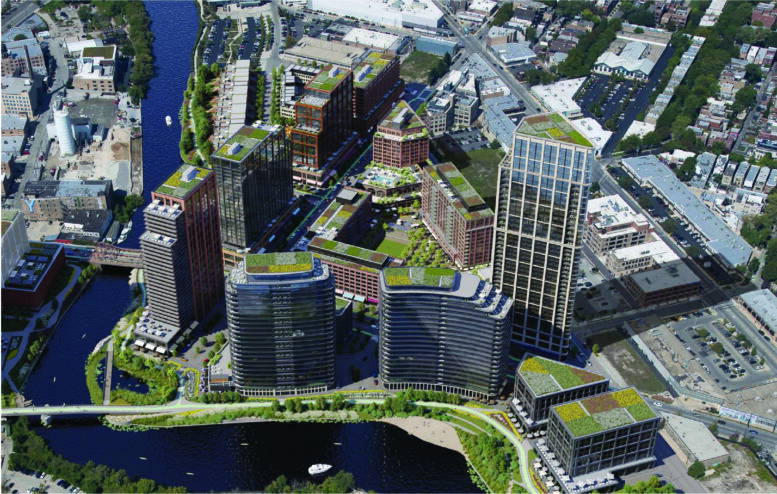
Additional details, renderings, and a Phase One timeline have been revealed for Foundry Park ahead of its Plan Commission review later this week. Located on the northern half of the former Lincoln Yards site in Lincoln Park, Foundry Park has been in the works by local developer JDL since the firm purchased the site last year after the previous megadevelopment stalled.

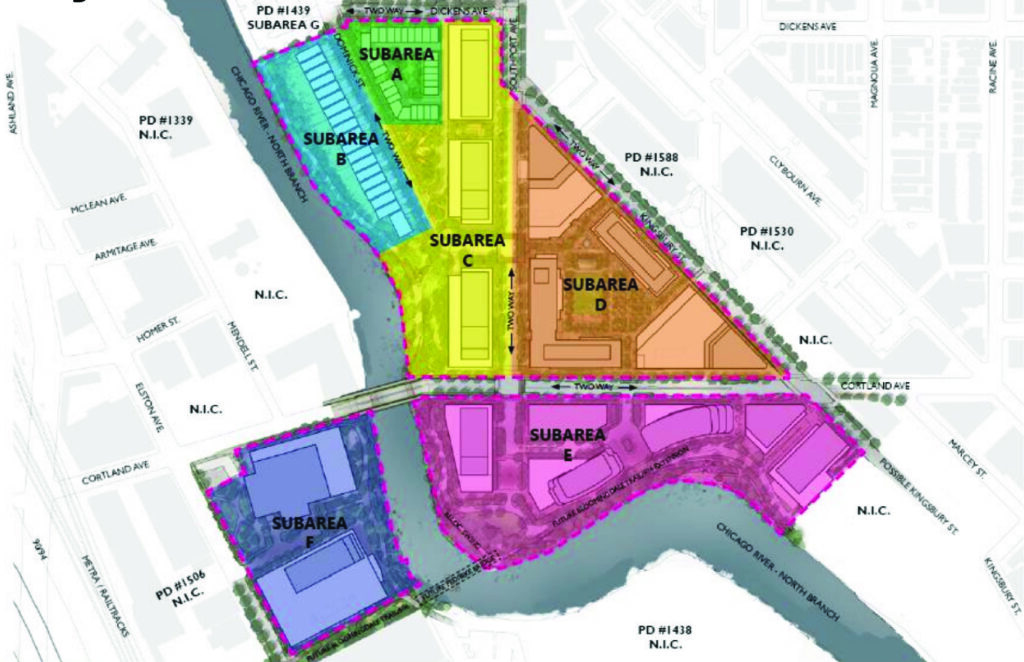
Site map of Foundry Park by HPA and Nudge Design
JDL, which is also behind North Union and One Chicago, has been working with HPA and Nudge Design on the multi-phase development. The overall project will include 3,737 residential units of various typologies, 350,000 square feet of office space, 420,000 square feet of retail and commercial space, and 200,000 square feet of additional uses such as hotels, parks, and parking.
Infrastructure
As we’ve previously reported, the project will be centered around an extension and reconstruction of North Southport Avenue as well as West Cortland Street. Several additional roads and alleys will also be included around the northwest end of the site. The two major arteries will feature bike lanes, on-street parking, and traffic-calming design to improve pedestrian flow.
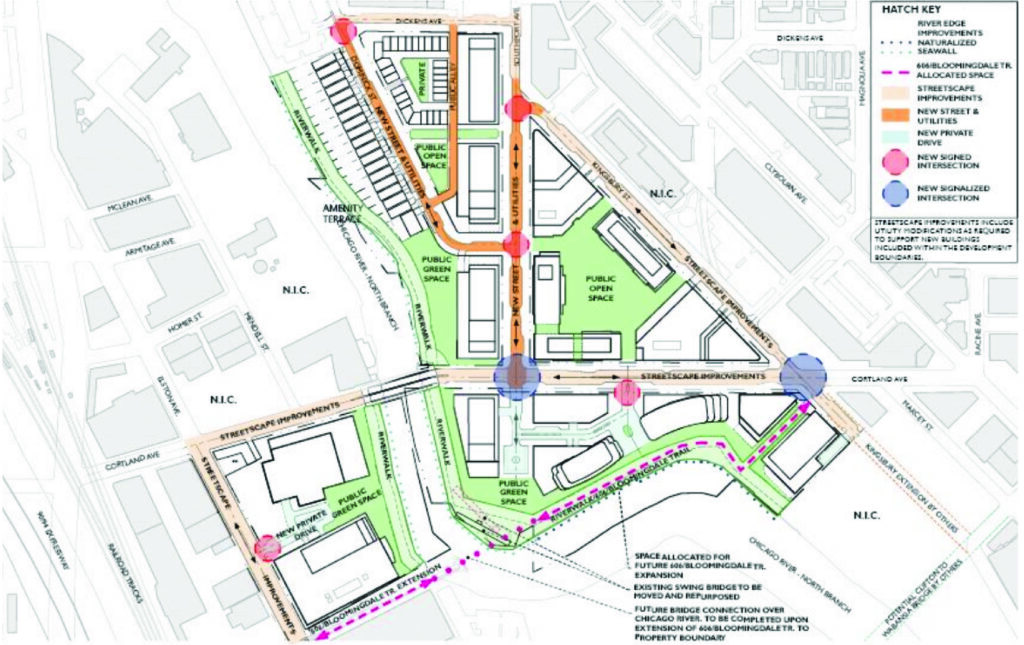
Site traffic map of Foundry Park by HPA and Nudge Design
The infrastructure work will include two new signalized intersections and four signed intersections. Additionally, the project will feature a new riverwalk spanning the entirety of its waterfront. This will take on different forms with varying widths and slopes, including an elevated section across the former swing bridge. These features will allow for a small beach, wetland areas, embankments, and more.
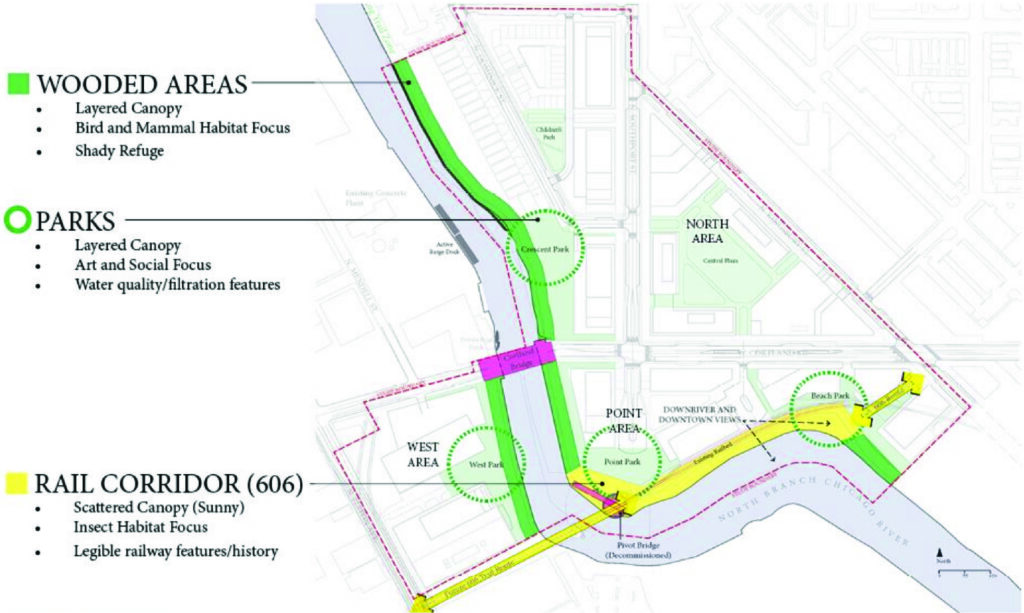
Riverwalk map of Foundry Park by HPA and Nudge Design
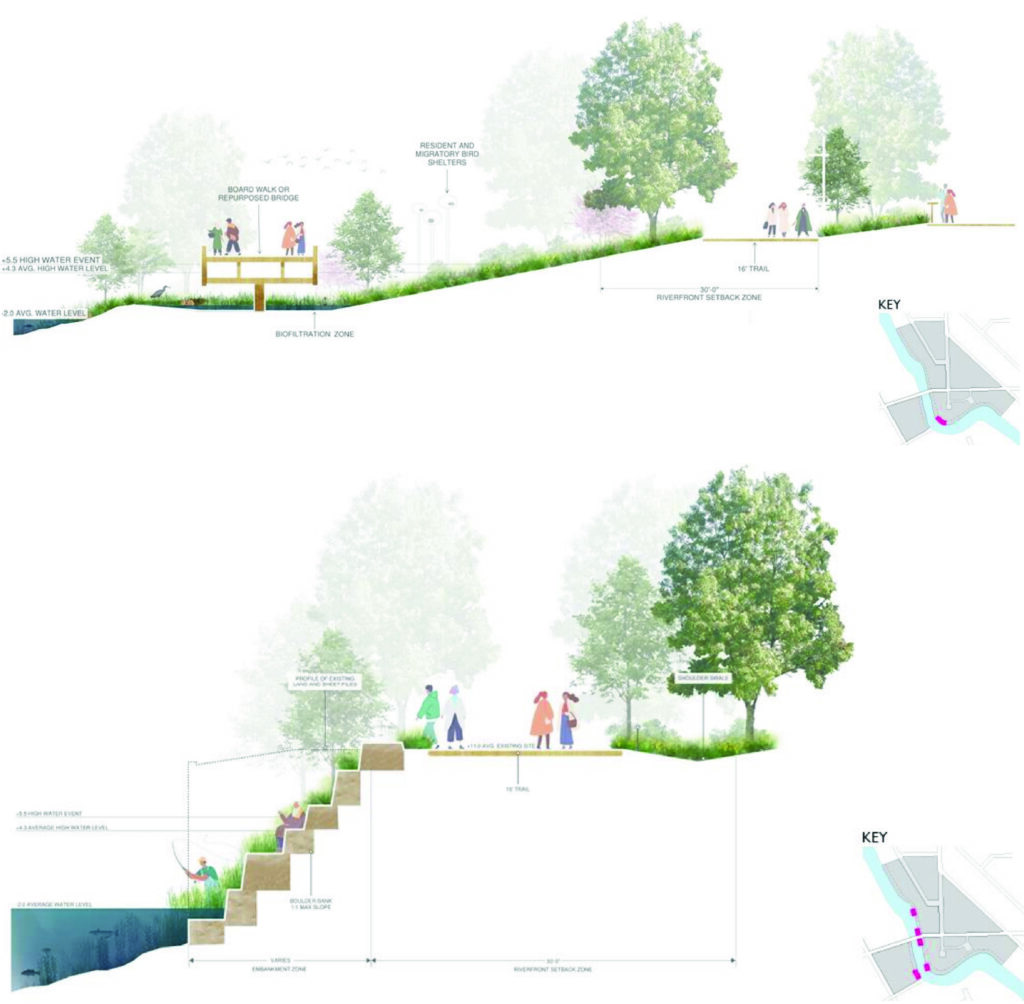
Riverwalk sections of Foundry Park by HPA and Nudge Design
Across all phases, the project will also include multiple acres of park space, including playgrounds and public plazas. The development team hopes to add a future water taxi stop and plans to implement a private shuttle to nearby CTA and Metra stations. Additionally, the site is primed for a potential 606 extension should the city pursue it further.
Phase One
Construction will begin with one of the larger portions of the project on the northeast corner of the site, bounded by North Kingsbury Street. The triangle-shaped lot will be excavated for a two-story, below-ground parking garage with 800 shared spaces. Access will be provided from Kingsbury Street to help maintain a pedestrian-focused project core.
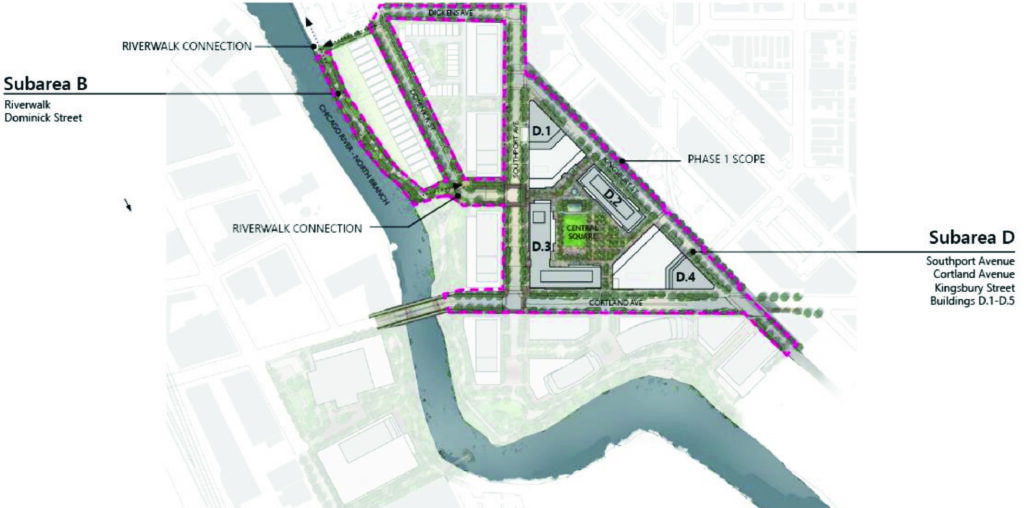
Map of phase one of Foundry Park by HPA and Nudge Design
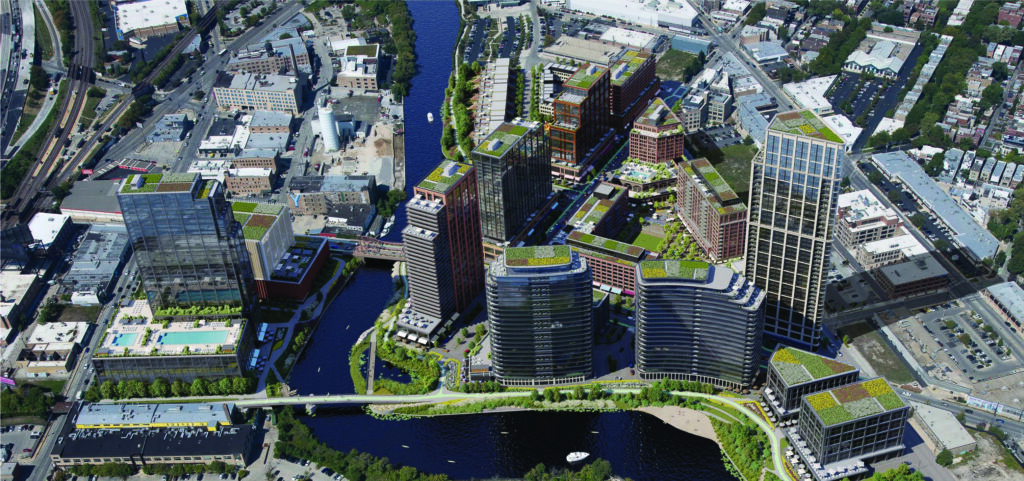
Rendering of Foundry Park by HPA and Nudge Design
Above the garage, four structures will rise. To the north will be an 11-story hotel reaching 170 feet in height, featuring approximately 180 keys, a banquet hall, and multiple dining spaces. To the south will be two residential buildings: one rising 13 stories with 252 units and another rising eight stories with 220 units. Both buildings will include ground-floor retail and rooftop amenities.
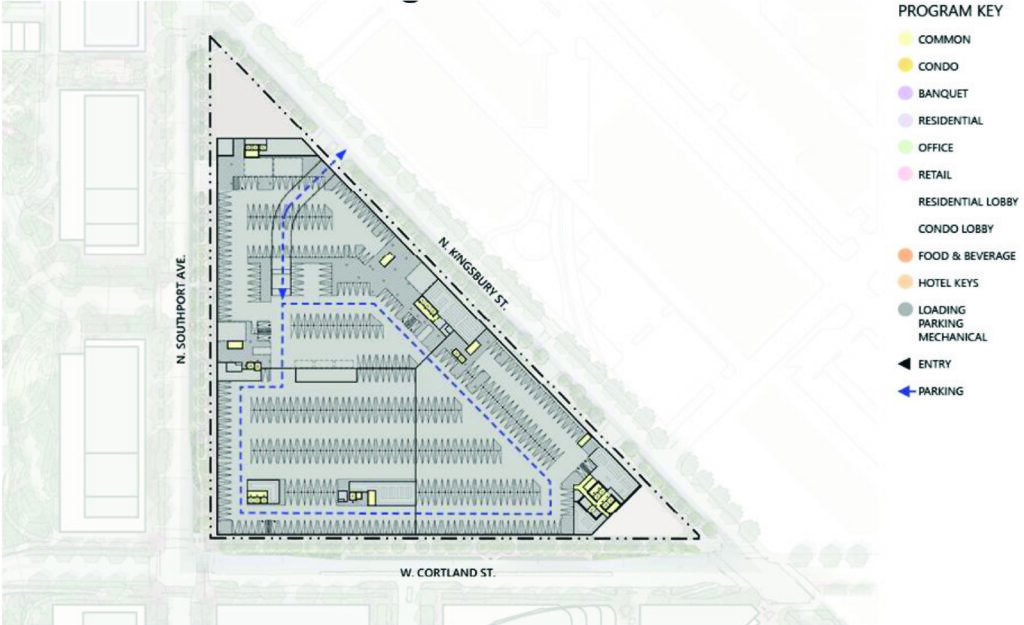
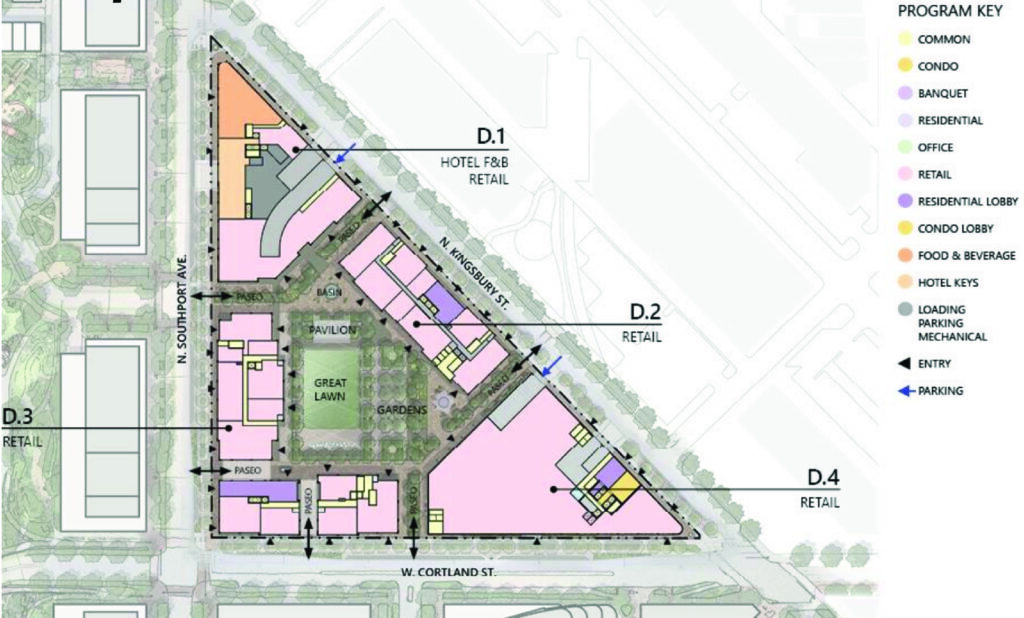
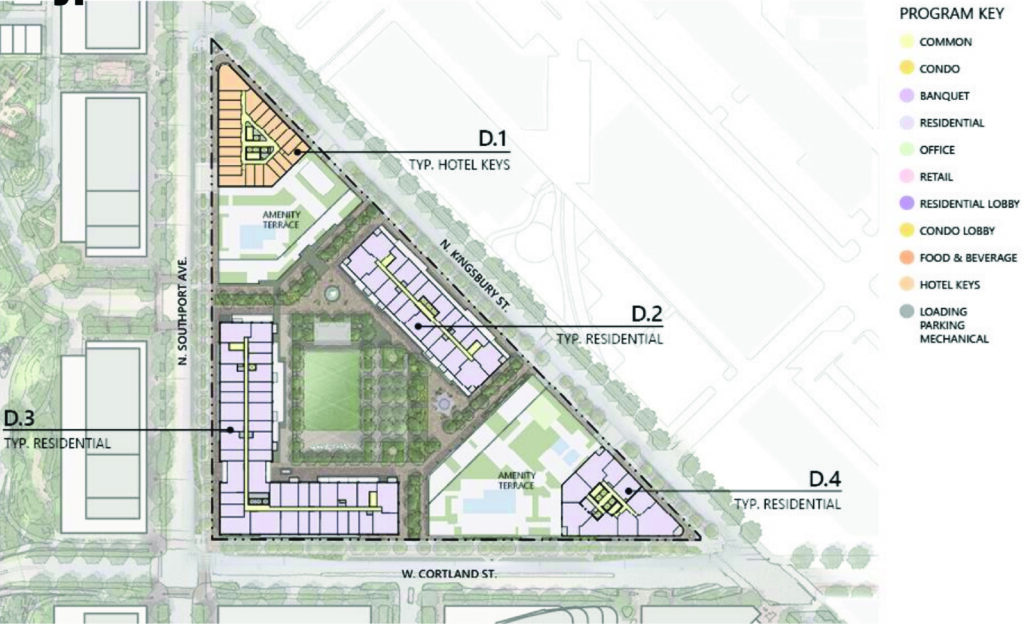
Basement – ground – tower plans of phase one of Foundry Park by HPA and Nudge Design
The tallest Phase One structure will rise on the southeast corner of the site. This 38-story, 520-foot-tall tower will sit atop a large podium containing large-format commercial space and two floors of office space. The tower will include 428 residential units, with apartments in the lower portion and condominiums in the upper portion.
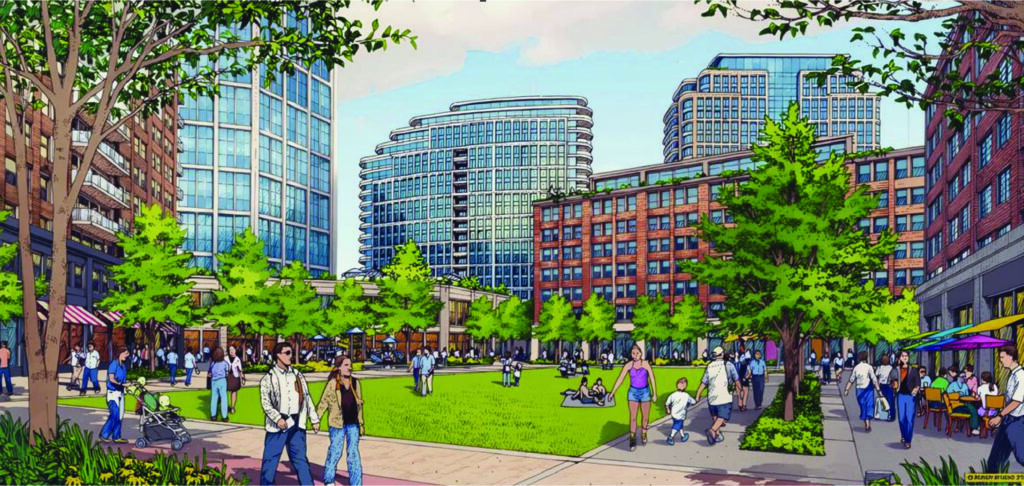
Rendering of Foundry Park by HPA and Nudge Design
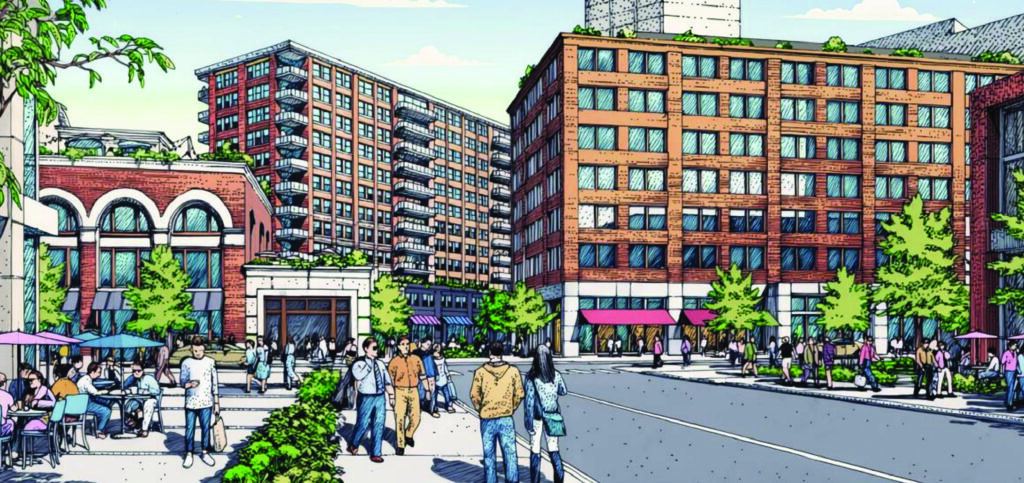
Rendering of Foundry Park by HPA and Nudge Design
In total, Phase One will include approximately 900 residential units. All four buildings will be arranged around a two-acre central plaza featuring retail patios, fountains, gathering areas, and a large central green designed for seasonal programming such as farmers markets and winter ice skating.

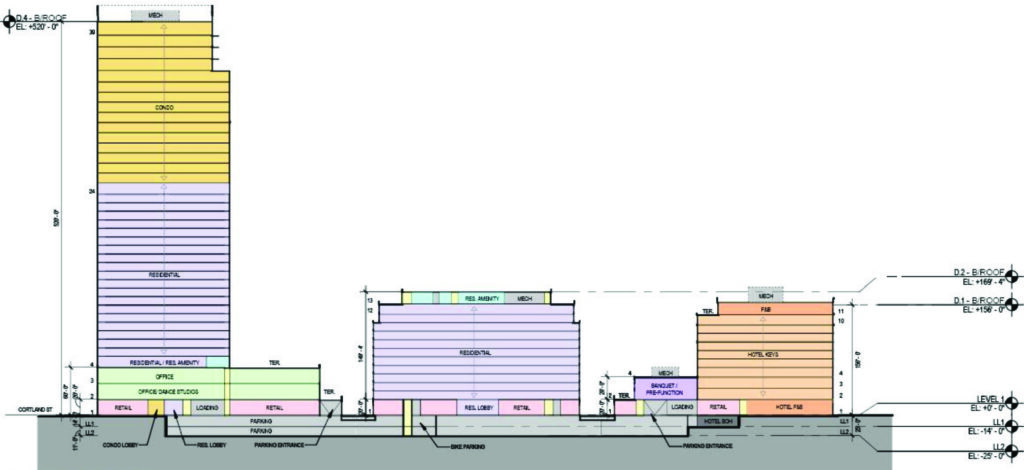
Section of phase one of Foundry Park by HPA and Nudge Design
The buildings will be clad in a mix of brick, glass, cast stone, and metal panels. Phase One also includes construction of the project’s primary roadways and a portion of the riverwalk along the northwest edge of the site. As with other projects, 20 percent of the residential units will be required to be affordable, with the developer planning to include a large portion on-site.
Future Phases
Phasing details for the remainder of the site have not yet been revealed; however, future phases will add additional acres of parkland and complete the remainder of the riverwalk. Another small underground parking garage will be constructed on the southern end of the site, south of Cortland Street.

Rendering of Foundry Park by HPA and Nudge Design
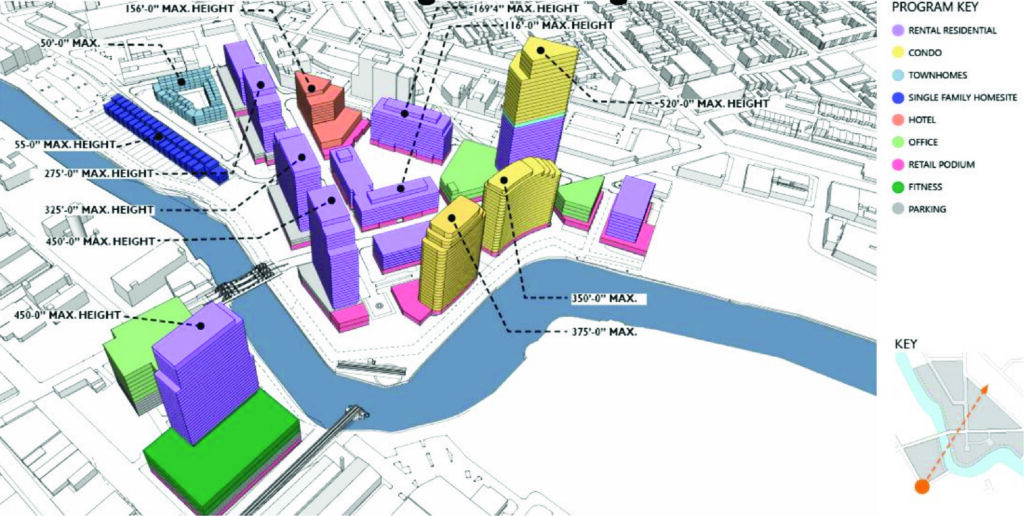
Foundry Park massing and program diagram by HPA and Nudge Design
An additional 11 mid- to high-rise buildings will be developed, most ranging between 250 and 450 feet in height. Six of these will be apartment buildings with ground-floor retail and some additional parking, including one on the western side of the river featuring a multi-story lifestyle fitness club. Two additional towers along the southern edge of the site will be condominium buildings, while two smaller low-rise structures will house office space and additional parking.
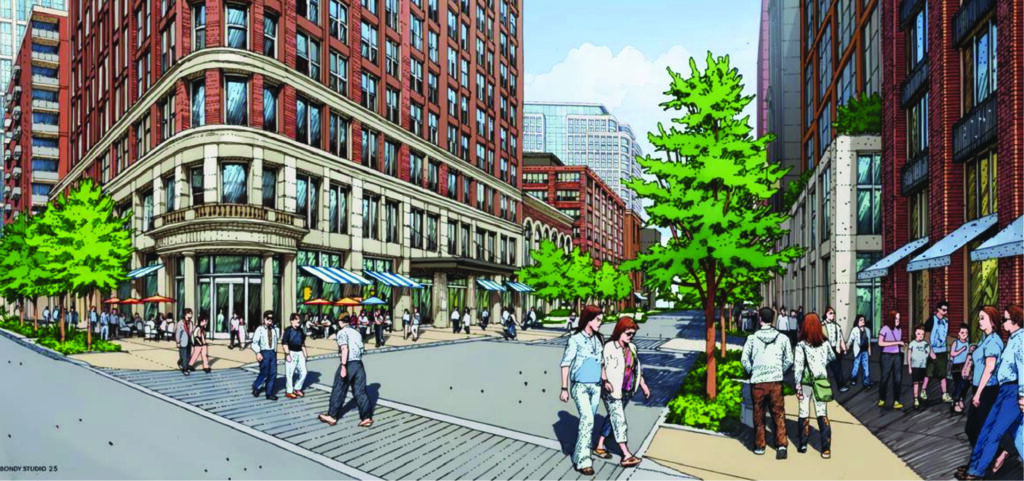
Rendering of Foundry Park by HPA and Nudge Design
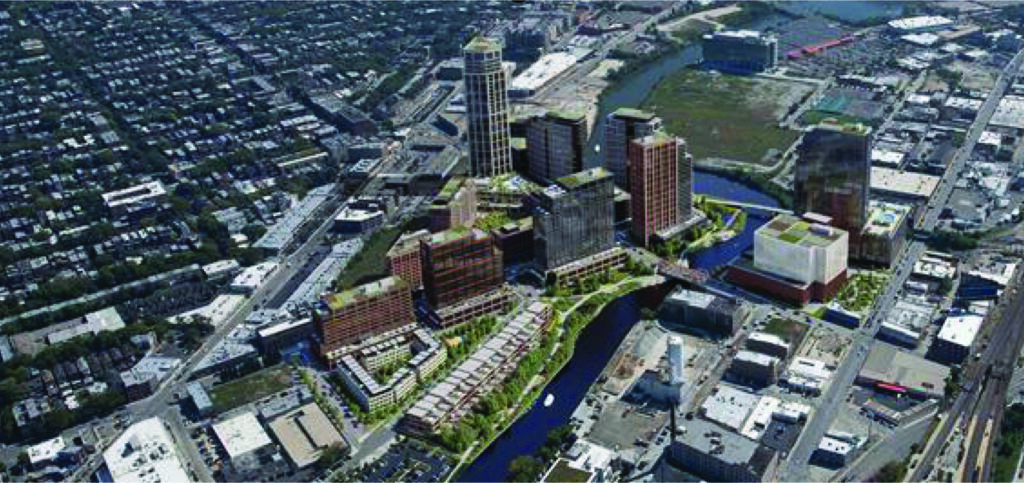
Rendering of Foundry Park by HPA and Nudge Design
On the northern end of the site, along West Dickens Avenue, 28 multi-story townhomes will be built around a central park space, along with 19 riverfront single-family homes featuring large backyards. In total, the project is expected to create 2,500 permanent jobs and generate more than $1 billion in tax revenue over the next 20 years.
What’s Next?
With the Plan Commission expected to approve the plans this week, the development team would receive an amended planned development from the original Lincoln Yards approval. This amendment would separate the southern half of the megadevelopment under its own planned development, allowing JDL to move forward independently. If all goes according to plan, a groundbreaking is scheduled for October 2026.
As we previously reported, the southern half of Lincoln Yards—and its only completed building, 1229 West Concord Place—recently found a buyer: local contractor Novak Construction, as of late last year. Novak does not have experience developing projects of this scale, and no details have been revealed regarding their plans for the property.
Subscribe to YIMBY’s daily e-mail

Follow YIMBYgram for real-time photo updates
Like YIMBY on Facebook
Follow YIMBY’s Twitter for the latest in YIMBYnews
The street level renderings look really really nice. I hope it allows for much wider sidewalks and street level activation that a lot of the city is missing
Great point about wider sidewalks. This would be a great area for sidewalk cafes/restaurants. Think Division St.
Would be nice to have bump outs in that very last street level rendering. Why are we still anticipating cutaway curbs in the year of our lord 2026, I’ll never understand.
The central plaza is really nice – this is how megadevelopments should be done.
Agreed 100% like Division St!
Love the use of red brick and good old stone materials–hope it turns out as warm as the renderings.
Perhaps Sterling Bay did us a favor by creating a framework from which others could start when their plans fell apart. I think it shows that “mega developments” like Lincoln Yards may not be the way to go. Break them down to make them more financially feasible and provide more architectural variety. We haven’t had a great track record with these in Chicago over the years. Huge projects like The 78, One Central, and South Works have stalled due to various reasons. Perhaps approving a framework and allowing multiple developers to come in to finance and implement the projects is the better way to go. Maybe the framework is “making no little plans” while breaking them down into pieces that can be realized is the secret sauce.
It was always weird that they called it “Yards” when it was never a railyard to begin with. So happy that the SB fauxthentic project crashed.
Absolutely refreshing to see buildings at street level that *fully* engage the street with zero dead-walled parking podiums. These are all active, human uses for all buildings and the difference is immediately visible even in renderings! Other developers take note please.
Pretty funny/sad to include the bloomingdale trail in all the renderings and plans but make sure to not commit to actually providing a pedestrian bridge unless the city makes the push for it. Seems like it will not be happening
Simply reserving land for future expansion is more of a commitment than the city has put forward.
Sure, they published HOW they could maybe get the trail across the highway, but that study was published ages ago. Getting that major infrastructure to connect to the other side… no private developer is going to fork over millions to get a bridge connection, trail pavement, etc etc until that tunnel/underpass is built. The good vibes of dedicated space for the expansion is just as trivial as the city’s current word. As it stands now… everything is wishful thinking.
The 606 extension, along with all the other public utilities like road improvements, sewer line connections, etc, would be paid for with TIF money generated by the built infrastructure.
Paid for, but not done. TIF money was also allocated for transit improvements at the 78, and they won’t even open that darn road to connect Chinatown.
We need more results from these massive pools of money. So far, most seem to be handed out as part of LaSalle’s rebranding.
They’re able to move TIF money around with some regularity. Recall that Millennium Park got TIF money from LaSalle St CBD TIF funds.
I don’t know nuttn about the 78 but if the road to China is not open it probably has something to do with CDOT who’s not known for their acumen re the built environment – see their new Logan Square reconfig.
Love seeing all of the green roofs on every building! Hopefully they active the roofs as productive green roofs instead of just dead sedum. I would love to see The Roof Crop doing something up there.
I visited them during Open House Chicago and they farm flowers on top of McDonalds HQ and produce on Maxwells Trading. They also seed “prairies” on top of buildings, and I love that idea for here! From industrial wasteland to rooftop prairieland!
in the riverside location, planting them to be hospitable to migratory birds might be pretty mixed, depending on how bird friendly the glazing and lighting is.
Amazing project!! Given how nice One Chicago and completed North Union buildings-, I’m super excited, this would be a perfect location to live in Chicago, removed from the noise, no L stops nearby, close to the highway, to downtown, 606 trail and Midtown gym. Glad to see condo portion in the tallest tower. I’d love to live there.
Very confused as to how you can be “removed from the noise” and “close to the highway”. Not only is the Kennedy quite loud, but Metra tracks are close by and very much within ear shot.
I thought the same. I’ll never quasi-suburban thinking.
By removed from the noise I meant random people crowds who don’t live in the area. As far as the highway, I live in the exact distance from it and no noise I can complain, same with metra it’s much quieter than the L
Any plans for transit in the area, or is this just going to be an island that only accessible via car traffic?
Armitage CTA station and Clybourn Metra station already exist. They could cheaply add a bus route on Clybourn if they wanted to – not sure of that route still runs today or how frequently.
There is no bus route on Clybourn anymore, service stopped in the mid 2000s iirc. However if this takes off and there is a lot of demand they would probably reinstate some service
“They could cheaply add a bus route on Clybourn”
Armitage bus runs on Cortland (when the bridge isn’t closed for construction).
It’s about a mile to the red line at north, which is definitely not ideal, nor is saying “ride the brown north first”–if one is trying to go south.
I didn’t realize just how close the Clybourn Metra is. Just a walk across the river and you’re literally on a nonstop train to the Loop.
Underrated cycling aspect to this site: You have the quiet, low-traffic part of Southport that will take you straight into Lakeview and beyond.
Based on the commentary here, I think it’s safe to say, “If you build it, they will come”.
Kinda hate it because it’s a suburban style design – lots of gracious automobile drop off areas between big isolated towers. And tons of green space whose primary purpose is to sell the project to skeptical neighbors and which won’t get a lot of use, and whose emptiness doesn’t exactly enhance the pedestrian’s feeling of safety. And the long strip of townhouses that has no apparent connection to the rest of the buildings is odd. This is the way things are done these days – over-designed, and kinda anti-urban, more about ticking boxes too please the participants in the community outreach meetings than anything else.
So, Schaumberg on the River. Fine. It’s what our system is designed to promote. Go ahead and build it, the city needs the tax revenue.
Is this satire?
Co-sign. This development is nothing more than a financial vehicle. I can already see the retail spaces lined with slop bowls, mediocre cookie shops, a Starbucks, and either a Raising Canes or Chick Fil-A. It won’t be a neighborhood. It will be a mall with insanely expensive apartments above. The people who live there won’t hang out there. They’ll go to Wicker Park, Lincoln Park, or West Loop instead.
Soooooo, provide homes for people, still generate tax money on land that never housed the thousands poised to live here, and clean up a virtually desolate area?
The developer very much determines the tone of what’s to come; the city COULD chime in and be overly involved (this website has choice opinions regarding such), or we let the market find what the people want, and as time evolves, more authenticity takes hold. You can see new neighborhoods in cities that are actively evolving, such as Maxwell St. A decade kicks out some, replaces others, and some storefronts never fill. That’s why it’s better that this comes in phases, and the city council allows those to speak on behalf of the neighborhood. Get involved if this is a direct impact. Architects do like to listen, but developers are the ones needing more connection to thought.
I am struggling to see the hate of this project from what was originally promised to what it is now.
What would be your alternative? Cause based on the current city code (maybe that’s the issue), I don’t see many other results. Maybe more land could be consolidated to build a single, larger park, but then the buildings would become more fortress-like. The architecture is not set in stone, simply artistic what-ifs.
– The plan builds off the grid for a more human-scale approach
– The riverfront will be an instant win
– The street designs are prioritizing people
I agree that the townhouses are the weakest detail. Maybe that can be swayed. But I would much prefer to live here than in River North. And unless Chicago comes up with a miracle to bridge the transit gap, cars are the unfortunate default. You’re the numbers guy and know how financing would affect the need for a car. Does the city then maximize future development or artificially down-zone because of the missing infrastructure?
In a perfect YIMBY world, we get 0 space for parking, 1/2-mile-away MAX high-speed/consistent transit stops (probably not bus), and rents that are comfortable for an average person to pursue their dream while keeping the commute under an hour.
For the townhouses, they should look to a development from ~30 years ago up by Western and the river. Four stories, mostly duplex-up/down townhouses with nice tiered terraces / setbacks that feel very at home with the river.
You’ve never been to Schaumburg if you think this is Schaumburg. 95% of Chicago is suburban by your standards. And I guess the bungalow belt is then considered exurban/rural?
I agree with your sentiments but this is pretty good and not suburban for the vast majority of it. If it was suburban those townhomes would be detached houses, you wouldn’t have nice walkable mixed use streets and a continuation of an elevated trail which may have been only included to get funding and support but does that matter when the result is clearly very urban, especially for an area near actual suburban style developments like the strip malls on Cortland and big box stores. This is 100% an improvement for Chicago and better than Lincoln Yards which probably would have kept the area empty until the sun explodes
Can’t wait to see this get built! This area needs development to connect Lincoln Park to Bucktown/Wicker Park
This is such good news for the area. I live across the street. I cannot wait for this to be built. Love all the green space. The community needs to put pressure on Alderman Scott Waguespack to approve this project. Don’t forget he single handedly killed Sterling Bay’s Lincoln Yards project. His term ends May 17, 2027. If he kills this business deal, vote him out. He will likely run unopposed. The business community can surely find someone better to run against him. Lots of savvy business people in Lincoln Park.
Excellent stuff.