
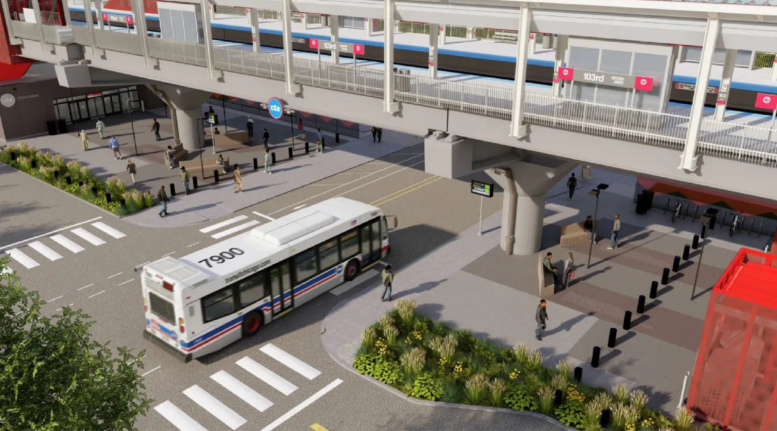
The first batch of more defined renderings have been revealed for the upcoming stations and plazas of the CTA Red Line Extension (RLE). The images are the first of more to come as the city hosts a group of community input meetings to allow local residents to guide the design of the new public spaces. The RLE officially broke ground this past April.
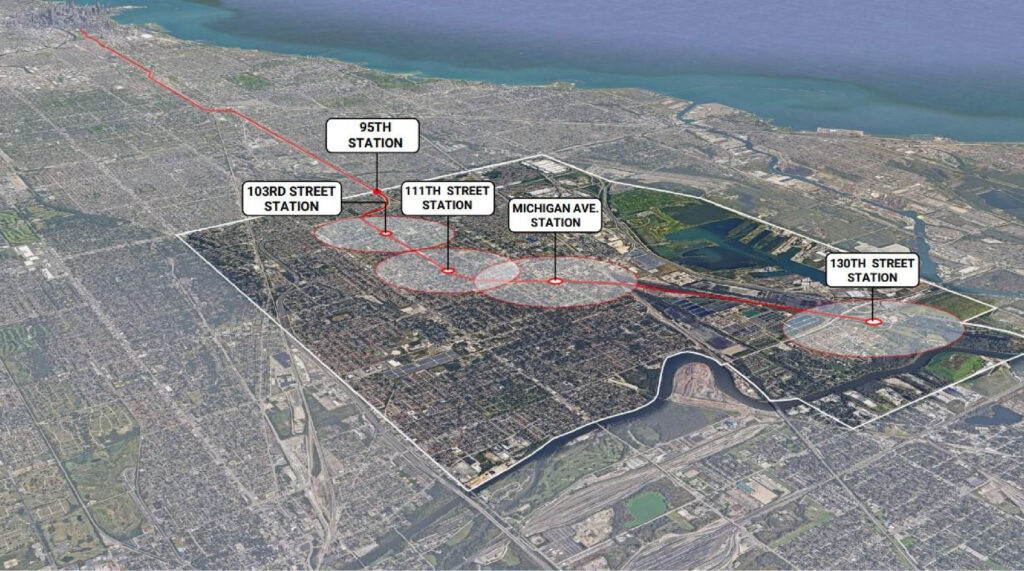
Map of Red Line Extension via CTA
The RLE has been in the works for over a decade and is finally moving forward after many setbacks, including ballooning costs, land rights, federal funding cuts, and more. Once completed, the 5.6-mile extension will utilize a mix of existing and newly built tracks to reach all the way down to 130th Street near Altgeld Gardens.
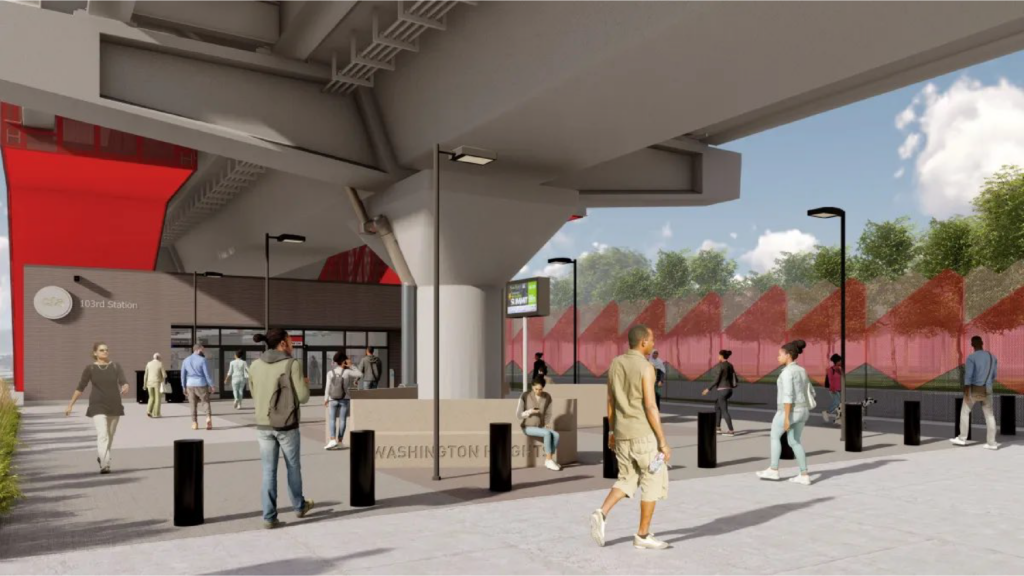
Rendering of Red Line Extension by Walsh-VINCI
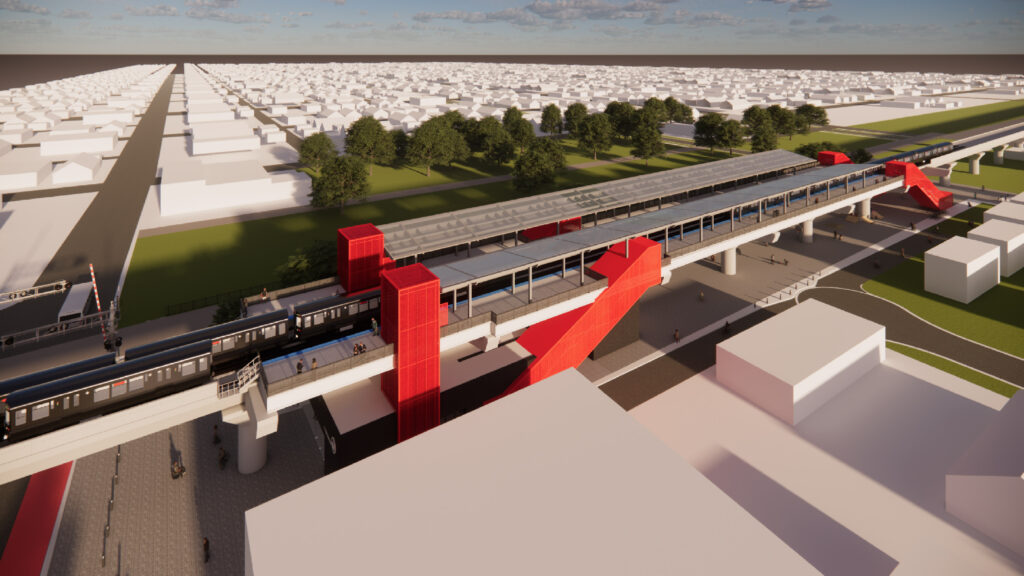
Rendering of Red Line Extension by Walsh-VINCI
Along the run will be stations at 103rd Street, 111th Street, Michigan Avenue, and the aforementioned new terminus at 130th Street. The station design will be a mix of those newly opened on the north side as part of Red-Purple Modernization, along with a platform design similar to those built for the Your New Blue program along the Blue Line in 2014.
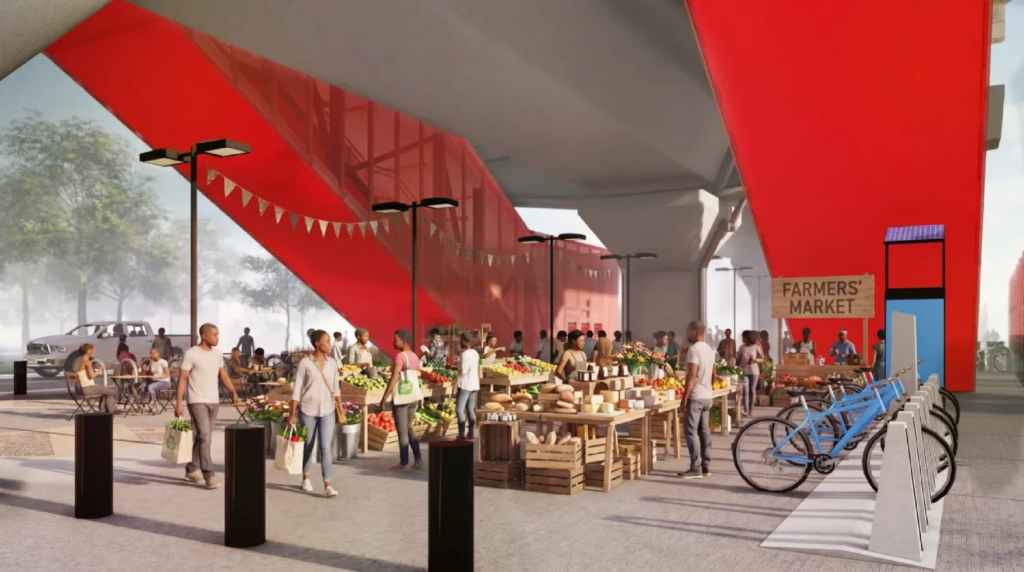
Rendering of Red Line Extension by Walsh-VINCI
The large public plazas under each will contain built-in seating, added landscaping, Divvy stations, event space for things like farmers markets, bike parking, and more. The project will cost roughly $1 billion per mile to build, similar to other major ongoing transit extensions nationally. Design updates will continue to be made ahead of its 2030 completion.
Subscribe to YIMBY’s daily e-mail

Follow YIMBYgram for real-time photo updates
Like YIMBY on Facebook
Follow YIMBY’s Twitter for the latest in YIMBYnews
Thanks for showcasing these renderings for the scheduled stations along the Redline Extension. It’s our hope to gather thoughts on these designs to further accessibility and visualization concepts. Because of the stations height we would need to project beauty and introduce various coverings for pedestrian protection from extreme weather conditions and public safety. At ground level, Greening the station area and innovation in lighting will be key within a two block radius. This afternoon, the 130th Street Station Pop Up will include an invite from local leaders for residents to form a Station Area Committee. The intent is to leverage Redevelopment around the station and the surrounding communities.
John Paul Jones, like a lot of CTA projects this one looks massive and inhuman. How about breaking it up with small stalls for retail? Even if you don’t charge rent, that would put humans there. You could allow stalls for food trucks or pop-ups as well. Roseland’s own Old Fashioned Donuts would be a great addition. The renders look great…because renders always do…but a farmer’s market? This will be a wind swept lonely plaza in no time.
Thanks. We do hope to improve upon these Station designs through localized station area committees. The design concepts are oftentimes driven by preferred industries that locks out opportunities. Also, we would need to anticipate added bus connections at various stations. Pace service demands will increase.
Those light poles look wrong under the structure; attach the lighting to the bottom of the structure. These areas should be very well lit from structure for less pole maintenance and repair. Where is the public art? It shouldn’t be a tacky add on when the project is finished. The bike station looks like it’s in the way of the market circulation. At first the renderings look good, but if you look closely there’s a lot missing and shows no cohesive coordination of project elements.
It’s good that the extension is getting built. At this point in the design, I wouldn’t look at renderings for detail information on each station, as it appears that details are still in “community feedback” mode. This is one step closer to connecting more parts of the city together as has been promised for decades. If they follow the model of the station rebuilds on the north branch of the red line, community oriented art, lighting, and other amenities will be included. With the quantum campus and other projects like at Pullman, along with hopefully better connectivity with the new Northern Illinois Transit Authority, this area can become its own economic engine.
The one thing that existing stations lack is a dropoff lane, which causes dangerous conditions at the street level. Cars routinely speed through these pedestrian crossings, and left turning traffic plows straight into bus and car dropoffs. The 87th and 79th station crossings are the most dangerous part of my daily commute. This can and should be fixed.
Not to be “that guy”… but the RLE’s cost is now estimated $5.75 billion. ~68,000 people live in Roseland, Pullman, and West Pullman combined. That’s >$80k per resident served by the extension. It’s amazing this was approved over more in-demand transit projects like an express blue line or more dedicated bus lanes.
I agree, total waste of resources, and we will never get an ROI on it. We will see little to no economic development because of it. Not much demand to live there, train stop or not
You’ll get your ROI once they extend it to the new airport in Peotone.
@Joe You know this has little to do with transit expediency and best of ROI on infrastructure. You know very well why this balloon 🎈 of a project got pushed through. So why ask why.
It’s not the right project for the CTA to pursue, but since it’s happening, I hope that we can learn lessons from this to build institutional knowledge and prevent out-of-control costs in the future.
That may be true now, but transit projects can have strong economic development benefits. The project could lead to more development and population growth in those neighborhoods.
I mean this is extremely low hanging fruit from a ROW perspective. I honestly can’t imagine any other projects that could even get past conceptual with how bad the NIMBYs have gotten here. When it comes to ROI, the problem here is not choice of project, but the cost of the project. This SHOULD be a cheap project but its not; I can’t even imagine what a more challenging project would cost at this point. We need to focus on bringing costs way down if we want to get anything else built.
You na increase its relevancy by providing parking at all the stations esp the farther ones south. This could reduce traddif on the Dan Ryan. Perhaps do a paid parking/ride free deal.
As for the stations themselves some good ideas here esp the kiss and ride drop-offs.
Aesthetically, ditch the cartoon primary colors – that red is too much. This isn’t preschool, it’s public transit. In fact do that system-wide; my Blue line station looks ridiculous.
This dude hates fun. What’s wrong with the colors? They are clear for location messaging.
As if you need a BIG RED STATION to know “hey, there’s the red line station! Who knew???!!!”. I told you why – because it looks childish. How about you learn how to read and I’ll learn how to use spellcheck in my comments? Deal?