
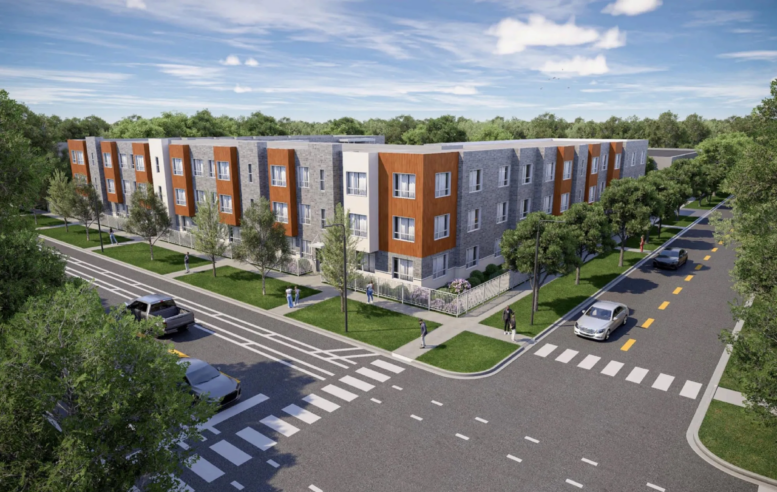
A groundbreaking has been held for the upcoming affordable housing development known as C.A.R.E Manor at 4531 West Washington Boulevard in West Garfield Park. We last covered the project in late 2025 as it received its building permits. Since then, additional renderings have been revealed by designer Triad Consortium LTC.
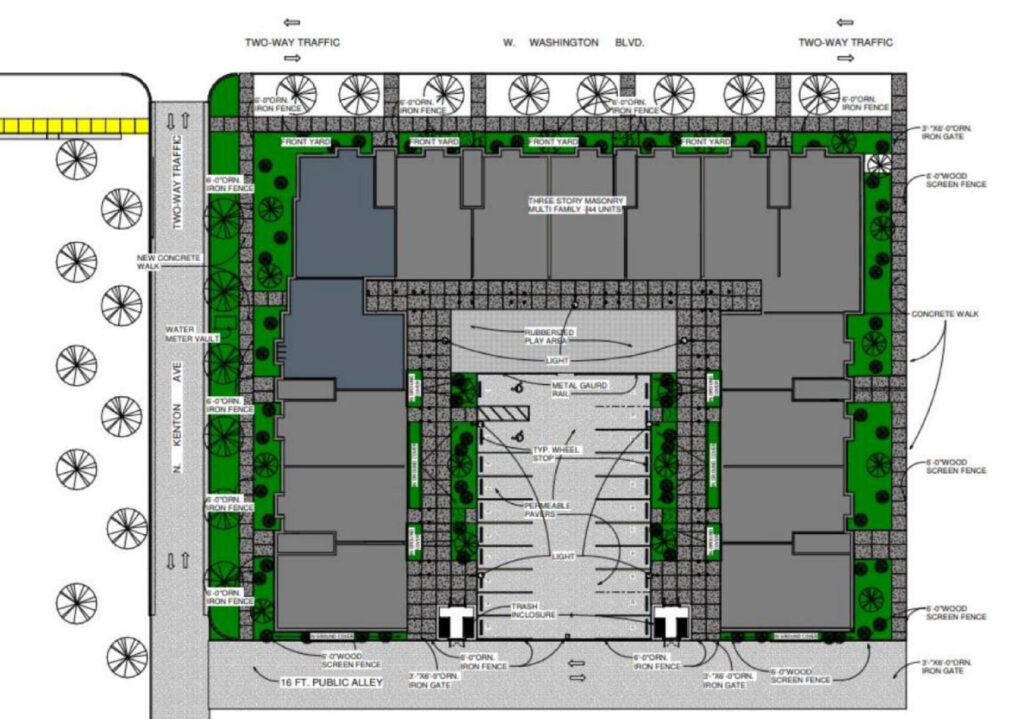
Site plan of C.A.R.E Manor by Triad Consortium LTC
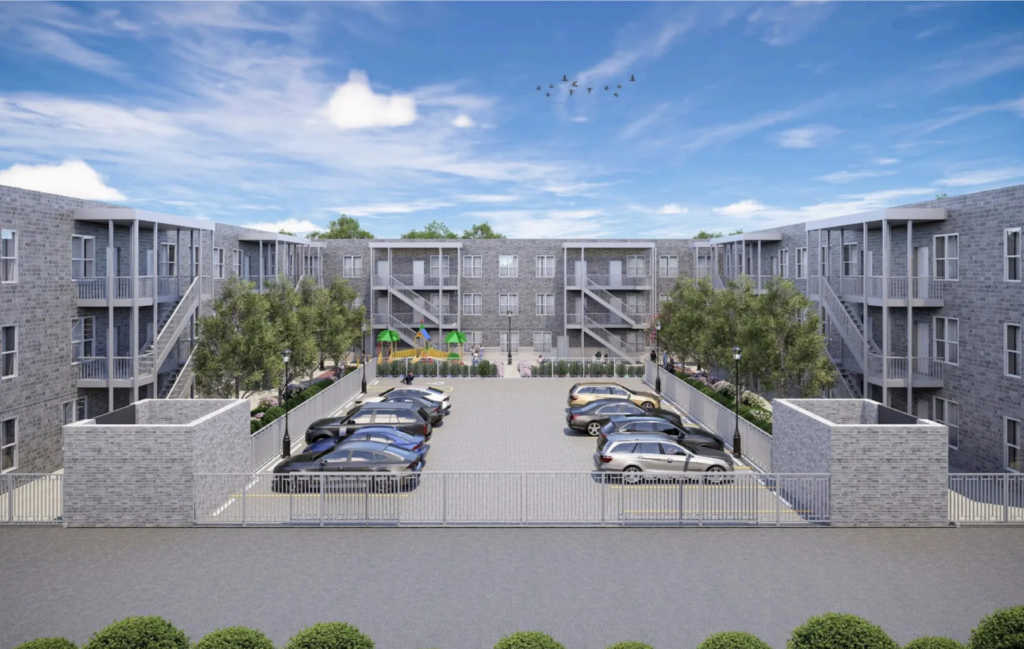
Rendering of C.A.R.E Manor by Triad Consortium LTC
Located on the corner with North Kenton Avenue, the project is being led by nonprofit United For Better Living and will replace a large vacant lot. The U-shaped structure will hug the edge of the property and contain a small courtyard in the center with a children’s playground, paved walkways, planters, and a 21-space parking lot accessed from the alley.
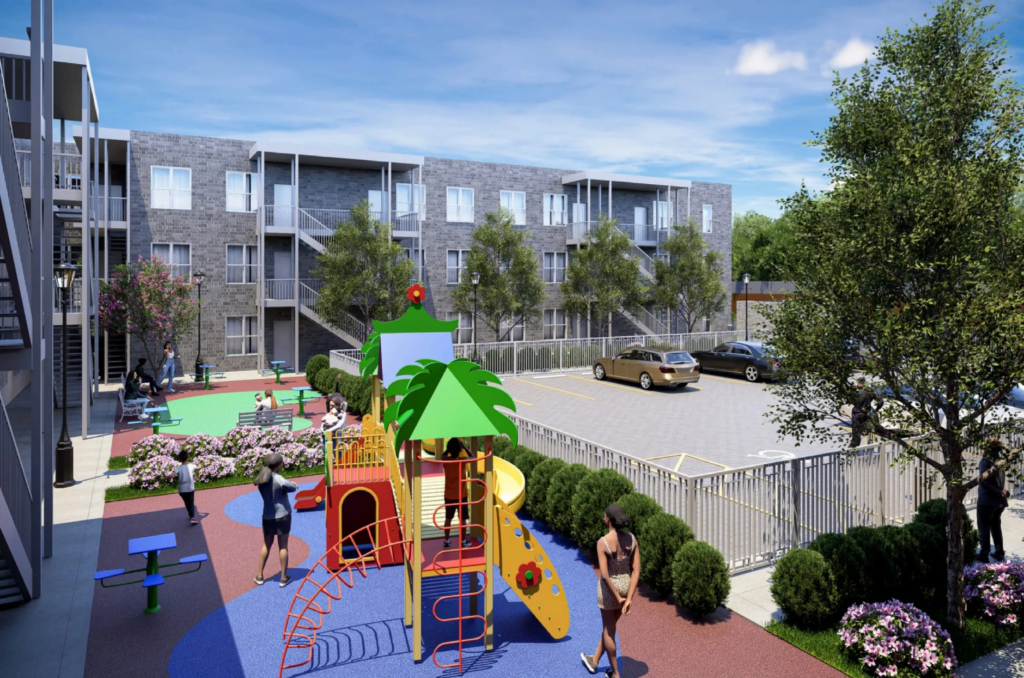
Rendering of C.A.R.E Manor by Triad Consortium LTC

Rendering of C.A.R.E Manor by Triad Consortium LTC
The three-story structure will hold 44 residential units aimed at small families, with 43 of them being a mix of two- and three-bedroom layouts and a single one-bedroom unit, all of which can be converted to be fully accessible. The interiors will feature modern finishes, large bedrooms with direct window access, and on-site laundry.
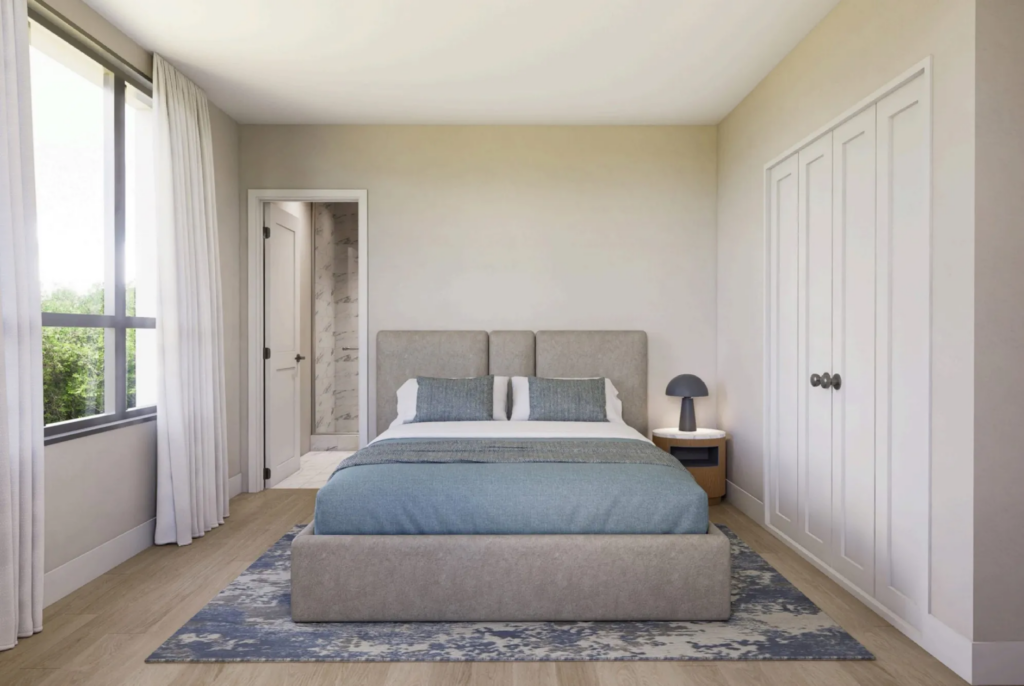
Rendering of C.A.R.E Manor by Triad Consortium LTC
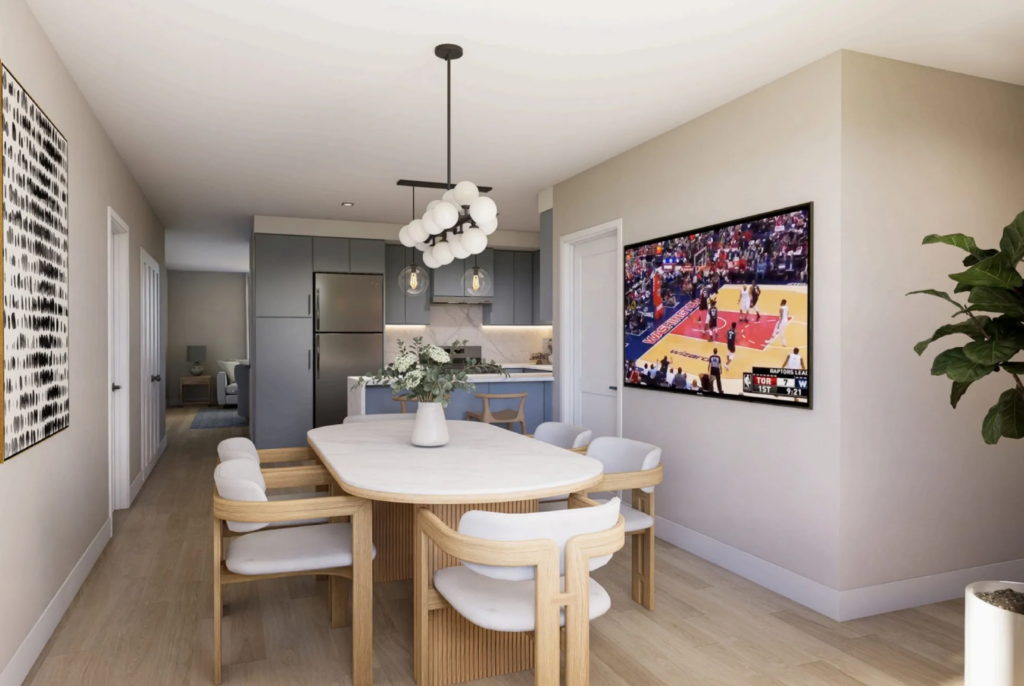
Rendering of C.A.R.E Manor by Triad Consortium LTC
Additionally, the organization will offer on-site social services, including access to a food pantry, adult learning, and GED support, according to Block Club. The $32 million project is being funded via a mix of TIF funds, which we covered in 2023, along with bonds and Low-Income Housing Tax Credits (LIHTC). Construction is set to be completed in the fall of 2027.
Subscribe to YIMBY’s daily e-mail

Follow YIMBYgram for real-time photo updates
Like YIMBY on Facebook
Follow YIMBY’s Twitter for the latest in YIMBYnews
This is great. I like how the balconies and play area are centered around the parking lot.
North of $725K per unit for stick-frame construction on land that was, I believe, free. Amazing.
The last filed. 990 I could locate for United for Better Living was for 2020 and the executive compensation was just short of 50% of their total donations. At $725K per unit perhaps they should reconsider their purpose. They could house three times as many people through buying existing properties or rehabbing distressed properties.
West Garfield Park needs this. We need to fill some of the vacant spaces in that neighborhood. Many, many houses have been vacated, demolished and torn down. Good to see something being replaced. My hope is that it remains stable.
Affordable housing doesn’t mean low‑cost construction. There’s so much information available that explains why these projects often have a higher cost per unit than market‑rate housing. They rely on multiple layers of public financing, require far more legal and regulatory approvals, and must meet design, construction, and long‑term operating standards that exceed what is required from a market‑rate developer. It’s a flawed system, but it’s the only one we currently have to provide below‑market rate homes at scale. So if your “$725K per unit” math bothers you, don’t blame the organizations building long‑term housing with services for people struggling to pay their bills. Direct that frustration toward your elected officials.
I am directing my frustration at elected officials. They’re the ones pricing people out of their homes by raising property taxes for boondoggle like this.
Tiny homes for sale on Amazon for less than $300,000 what a waste
This is a good example of why I think the fuss over single-stair deign is a little overblown. This is a great example of how egress can be provided without compromising architecture.
That’s IF you have a courtyard AND are not trying to go beyond 3 stories. In most urban settings, 5-8 stories is the goal when land is scarce, when development is dense near transit, and when maximizing built space without compromising healthy design.
On the sparse chunks of Chicago, this can be tolerated. More dense than the bungalows, not quite on top of a transit corridor, and the land available isn’t limited. Build like this downtown? You will get the same amount of animosity that the Cabrini Green development got for its poor land use. (520 W. Hobbie)
Single-stair reform will never have as much of an impact as the current potential housing bill’s rezoning of most of IL. But it will once again restore, probably, Chicago’s best vernacular courtyard to its former glory.
The choice isn’t between this project by this developer on this land with this funding source and some other project on this land by another developer with another funding source. The choice is between this project or absolutely no project on this land of any kind whatsoever. There’s a reason this land has sat empty for many years.
Projects like this distort the market and make market rate development unfeasible. This wasn’t a brownfield. This is 100% “nonprofiteering”. Connected individuals secure tax dollars, build units that cost above market rate, pay themselves salaries that are above market rate (with almost no risk) and pat themselves on the back. Meanwhile, property taxes are pushing people out of their homes. Great system for those who game it correctly.
Projects like this create a market in real estate where they wasn’t one before. This was a brownfield. The individuals who are doing this project may well be “connected” but there is no “market rate” in a neighborhood that doesn’t have a functioning real estate market. I agree that much is out of balance about the real estate market in Chicago but that is beyond the control of Chicago. It’s the result of countless decisions about transportation spending and tax law made in Springfield and in D.C..
There is no marketplace in that neighborhood? What does that even mean? There isn’t a ton of building but that’s because of the distorted market incentives. This is beyond the control of Chicago? There are tons of listings. And people in that area are forming protests over their rising property taxes. I had not heard that this was a brownfield but am open to be proven wrong.
There is no real estate market in that neighborhood. If there were, it would have buyers and not just sellers. That’s why there are “tons of listings.” The “distorted market incentives” are free expressways, one is immediately next to this site, and the vast suburban highway industrial complex of subsidized mortgages and car infrastructure incentivizing developers and buyers to leave the area over generations. They are the ‘distortions’ at work here. I have not heard that anyone else wanted to anything at all with this site but am open to be proven wrong.
Matt, if being close to an expressway (and this site is certainly NOT immediately next to one–look at a map!), suburbanization, etc. are the market distortions then how do you explain all the developments that get done in Chicago without fat subsidies? Developments that are actually immediately on expressway. And seriously, I was not under the impression that this was a brownfield. I would be interested to be informed otherwise. Or was that as big of an exaggeration as you saying this is immediately upon an expressway?
All car-dependent developments are subsidized in the U.S. because car use is subsidized in the U.S. A third of the land in Chicago is “brownfield,” meaning it has no current market value. It has no market value because subsidized suburbanization lured demand away from it to suburban land over generations. The most subsidized developments in Illinois are McMansions on acre lots in DuPage County. They require more infrastructure spending per person and per square foot than any residential units in Illinois.
Your definition of “brownfield” appears to be yours alone. Along with “immediately next to”. You’re pathetic.
Truth be told, you sound delightful!
Matt, you join in a forum on affordable housing and make up facts to bolster weak arguments…when it’s all anonymous anyway. You sound like a sociopath.
Delightful!
I’d explain why affordable housing cost per unit is so high, but everytime people try on here, the trolls just say people are grifting.
Maybe it’s because people are actually grifting. I know…hard to believe that it can happen in a place like Chicago…
This forum isn’t about “affordable housing.” It’s about all development in Chicago.
Which makes it even stranger that you whip up fabrications about brownfields and places that are immediately on an expressway when they’re a mile away.
Charming!