
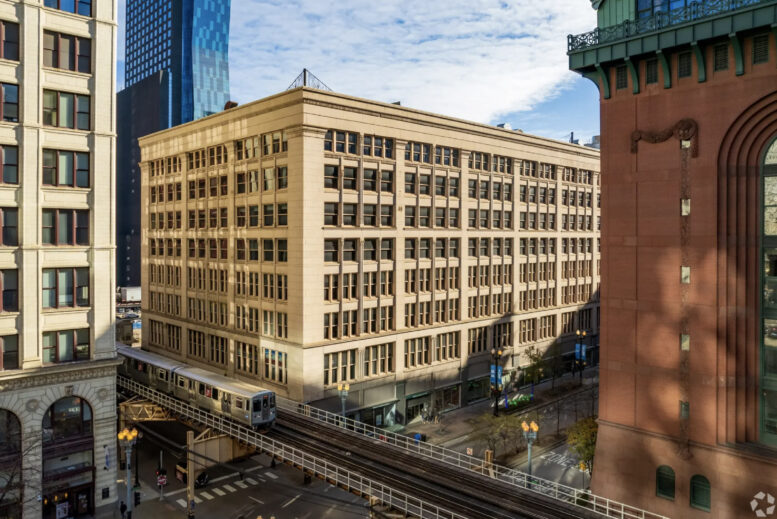
Initial details have been revealed for the vertical farm and housing redevelopment of the historic structure at 401 South State Street in The Loop. Located across the street from the Harold Washington Library and the shelved Assemble Chicago development, the project would bring much-needed life to an area of downtown plagued by vacancies.
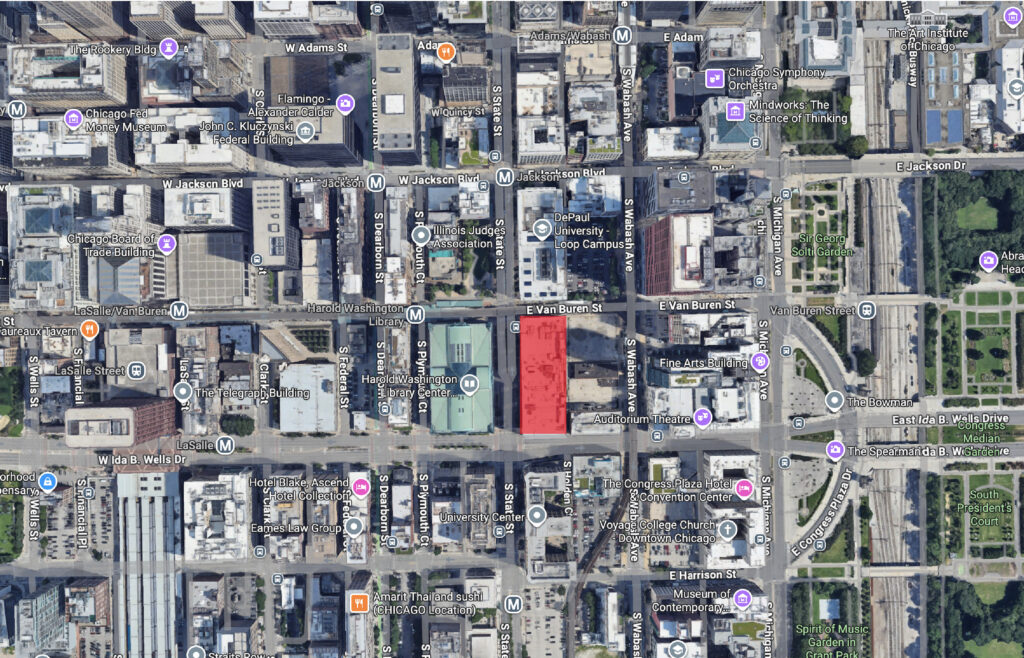
Site context map of 401 S State St via Google Maps
The block-long, eight-story building was designed by the “father of the skyscraper,” William Le Baron Jenney, in 1891 as a department store for Siegel-Cooper. After Siegel-Cooper’s demise, it became a Sears store for decades before being designated a landmark and later converted into a campus for Robert Morris University. Following Robert Morris University’s merger with Roosevelt University, the structure was vacated.
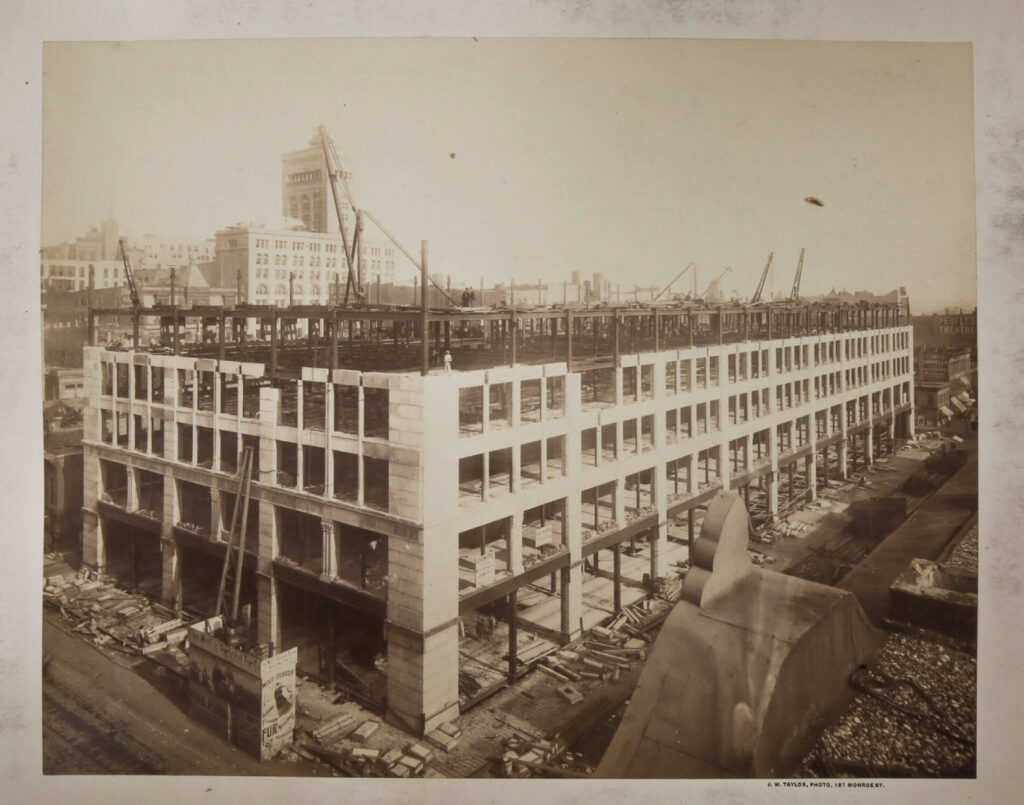
Historic view of 401 S State St via BLDG 51 Museum
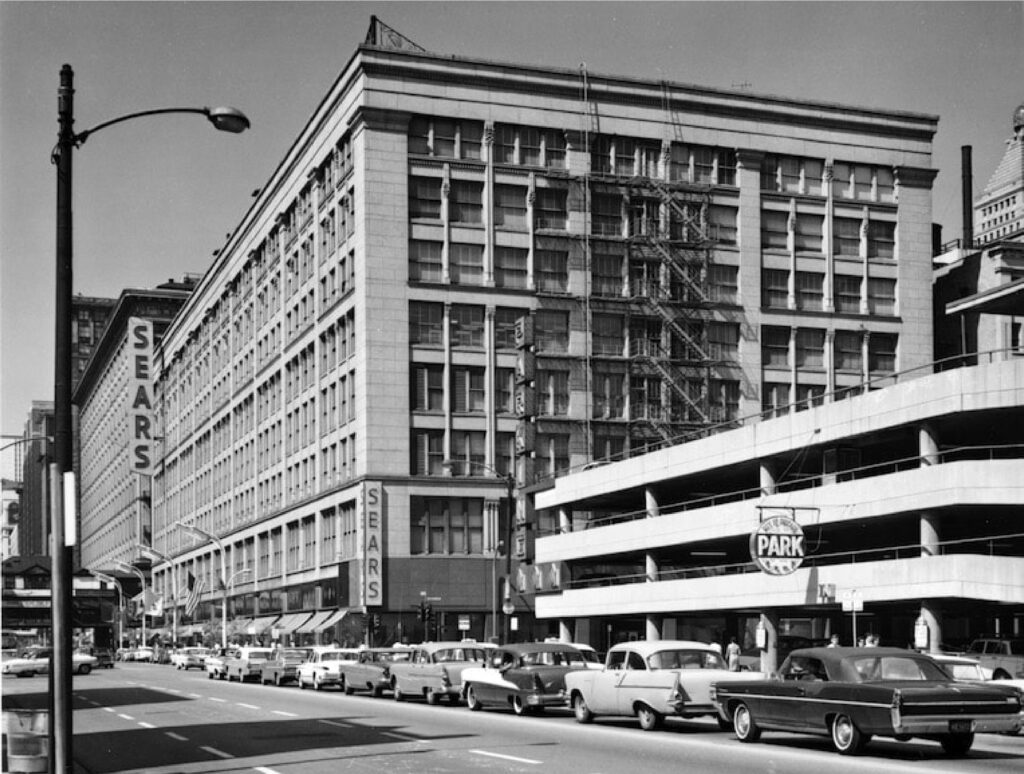
Historic view of 401 S State St via Chicago Detours
After sitting empty, local investor Marc Calabria purchased the distressed building for $4.2 million last year. Calabria is also part of Primera Group, which is behind the redevelopment of 105 West Adams nearby. Since then, he has been working with Chicago-based Farm Zero to pioneer the company’s first large-scale vertical farm and urban hub per CoStar.
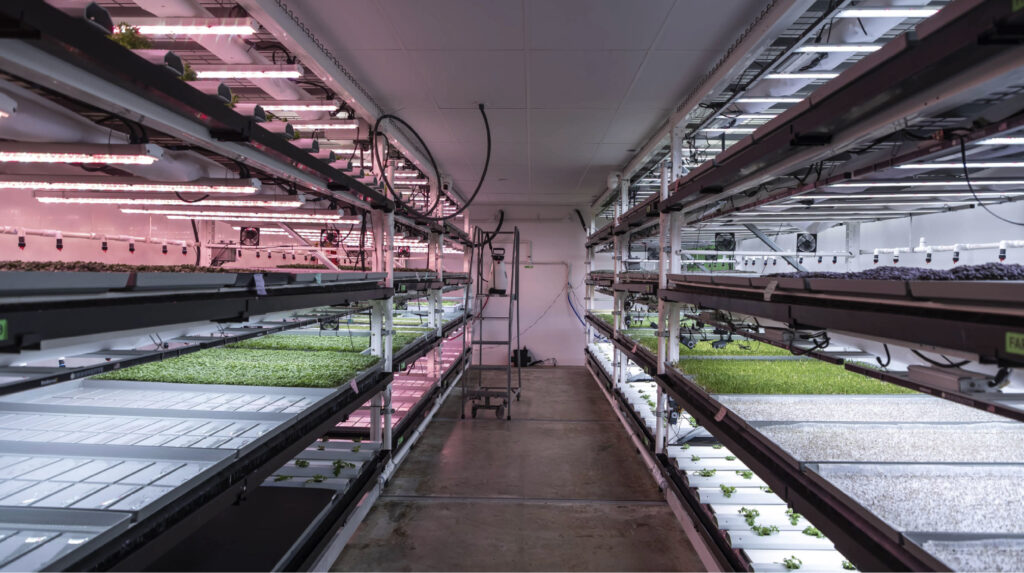
View of Farm Zero’s current facility via WBEZ
Farm Zero has been operating and expanding its test farm nearby and will occupy a large portion of the 485,000-square-foot building for its new facility. This effort will be undertaken in collaboration with the Institute for Food Safety and Health, Illinois Institute of Technology, the FDA, and the Dutch government to grow everything from produce to tulips for use in the city.
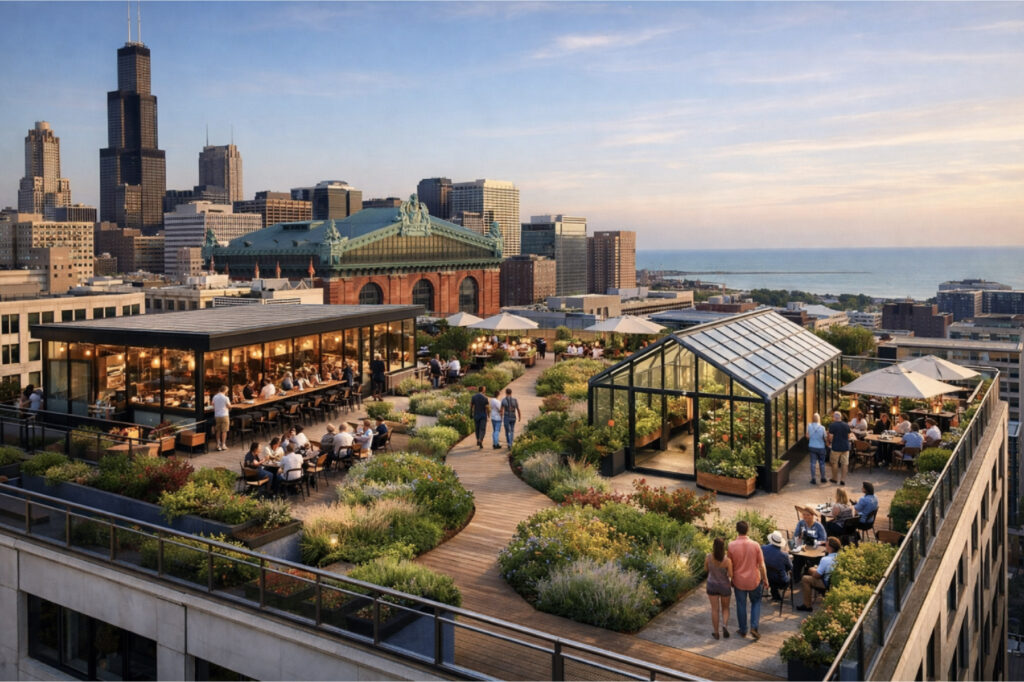
AI-GENERATED rendering of 401 S State Street by Farm Zero
The redevelopment will also include a health research center, an incubator for controlled-environment farming startups, a produce market, a restaurant, a greenhouse, and a rooftop garden. The project would also feature a housing component for seniors or students. At the moment, no timeline or cost has been announced.
Subscribe to YIMBY’s daily e-mail

Follow YIMBYgram for real-time photo updates
Like YIMBY on Facebook
Follow YIMBY’s Twitter for the latest in YIMBYnews
I would LOVE to live there among the vegetation. Great idea
This sounds like a fascinating project if it comes to fruition. It’d make a great stop for Open House Chicago.
Pretty sure you meant if it comes to vegetation, it’d make a great stop.
What a fascinating potential reuse for the Second Leiter Building. One of my favorites, I’m always amazed by how modern it looks for its age. Interesting to compare it to the load-bearing walls of the nearby contemporaneous Auditorium to visualize the way steel frames shifted design.
That rendering certainly is AI–buildings and perspectives all jumbled and misplaced. Lazy work from the design studio, but thanks for accurately captioning the image.
Yes indeed – I noticed that too. Can’t people just draw stuff anymore?
Given the lack of specifics on the project, I dont think a design studio is involved yet. That may be just an initial idea AI rendering with no involvement from an architect.
Almost 1/2 million sqft of urban agriculture. That’s gotta be one of the largest in the country.
Keeping the produce close to the point of consumption should be a no-brainer for cities. Less traffic of trucks going cross-country. Less waste dealing with spoilage. Better environment not throwing pesticides and herbicides in the wind. Significantly higher yields of plant productivity.
This stuff is my drug and I love to see it.
I feel the same about this. And it’ll make for tastier ingredients too since it doesn’t have to be picked so early so as to not spoil during transit before reaching the person eating it. Our produce is mostly tasteless from our grocery stores. Travel to somewhere like Italy and Greece and you’ll notice a HUGE difference in the quality and tastefulness of produce, especially tomatoes.
Strawberries in grocery stores gotta be the most deceiving thing. Perfectly red and fragrant, and tastes like nothing. 2nd comes mangoes. They will never be the right ripeness.
My college was the largest ag school in the country (by acreage), and students could pick produce for next to nothing. The citrus was unbelievable. If we could get trees on a rapid indoor scale in some wild bonsai form, my gosh, we’d solve it all.
(Replying in chunks cause a word seesm to be a no-no)
Oh, and dragon fruit DOES taste like something. It’s magical, and the stuff you see at Je-wel will never convey their powers. Passion fruit only has a few days to be consumed. As soon as they fall off the vine, the time is ticking. Simply hitting the ground speeds up the clock by half. Whole Foods would gobble that quality up if it could get it locally.
I found the culprit. “J*wel-Osco” getting censored is blasphemy on a Chicago-based website! lol
Economically, I suspect this is pure fantasyland. Vertical farms sound so nice. But the cost of operating in something like that on multiple floors in a congested area where all the light will have to be artificial (as opposed to a horizontal facility where sunlight is available) is going to be way out of whack.
Bold prediction: this building sits empty until it’s lost to taxes.
lol what?
Micro-mobility is present in many cities worldwide. Just need an army of delivery bikes and scooters. If only Chicago had a stronger presence of those mini delivery trucks.
As for the light… the vertical racks and the ability to produce literal tons of product enable high yields. The market for ornamental crops is especially lucrative. If there’s anyone I trust to make this math out right, it’s the Dutch. Given that their government is directly involved and the world’s largest producer of floral products, this is not an afterthought boondoggle.
Have some positivity for a change.
Urban agriculture is probably more profitable than you may be thinking. A huge portion of the cost of produce is water, labor, and transportation, all things we have more and urban agriculture can do more efficiently of than traditional agriculture. Restaurants are also willing to pay more for local produce.
Additionally, agriculture is typically assessed at a different rate than other lots. I’m not sure if that applies here.
How are they gonna get 18 wheel semis to deliver raw material and then transport product out right in the middle of downtown ?
Just like the rest of downtown. If semis don’t fit, they’ll use straight trucks.
Bring back the horse-drawn carriages, but with robo-horses.
This could also house a youth activity center. Games, computers,a stage. Give young people going downtown something free and constructive to do.
Ai rendered laziness does not bode well
$4.5 million for all that Sq footage? That sounds like a deal steal. The real estate taxes have to come wayyyyy down. Now we have to make up what this building was paying
“The Dutch Government?!” How bizarre.
The Dutch Government is known for consulting on projects in their respective expertise(s) namely urban development, transportation planning, and in this case, greenhouse agriculture.
Gonna have to take the glass half empty view here. Vertical urban ag will essentially never be profitable if they are paying around 10x more for land on the low end, and they have to pay for sun and rain which both come from the sky on other farms. There are only so many microgreens the people are willing to eat. 10 years on the high end– but I doubt this even makes it to permitting.
Agree urban farming is an urban myth
This would be amazing! With colleges around there, it could be a great way to collaborate on studies, bring jobs to that area, and be a great asset to the area while reusing a gorgeous, existing building!