
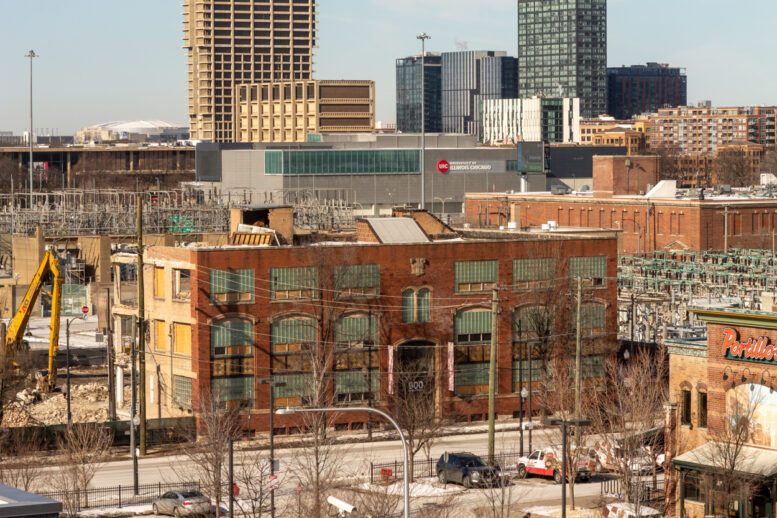
Demolition of a 1920s-era industrial-style office building is underway at 900 South Clinton Street in the South Loop. It was most recently the home of Susanin’s Auctioneers & Appraisers, whose signage is still in the glass-block windows along the east-facing façade. An internet search for the architect has proven fruitless, though indications are that the building was heavily renovated between 1998 and 2000.
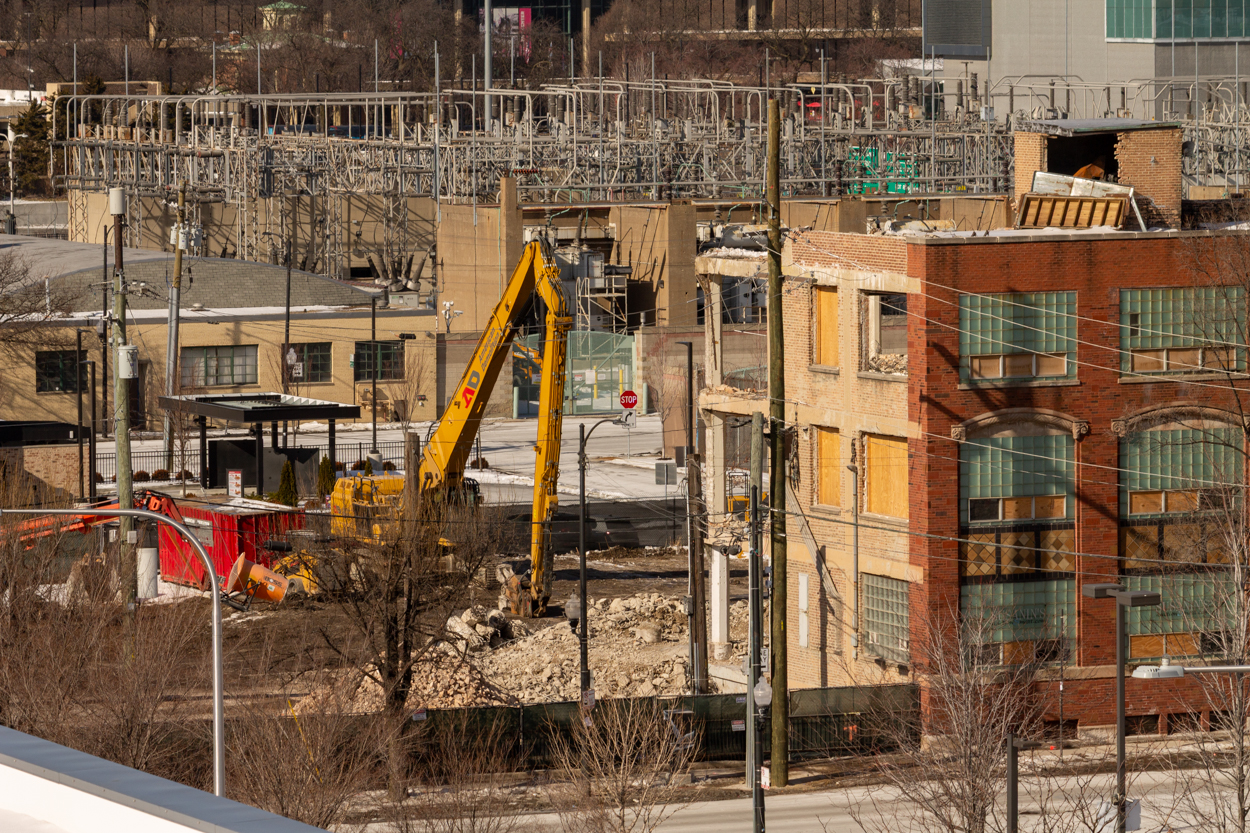
Photo by Daniel Schell
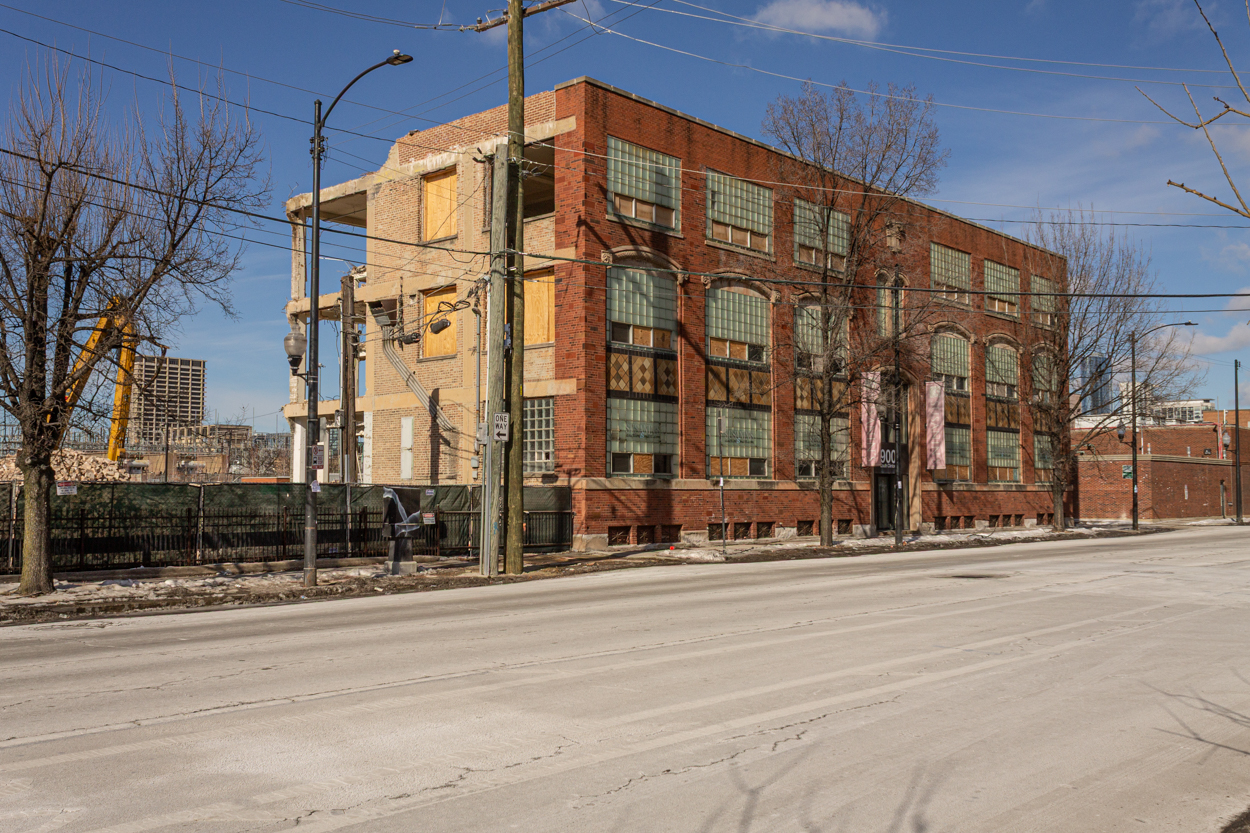
Photo by Daniel Schell

Photo by Daniel Schell

Photo by Daniel Schell
A demolition permit was issued for the structure on February 3, and it specifies that the footings, foundations, and concrete slab are all to be removed. American Demolition Corporation is the demo contractor, with the permit showing a reported cost of a whopping $453,500.

Photo by Daniel Schell

Photo by Daniel Schell
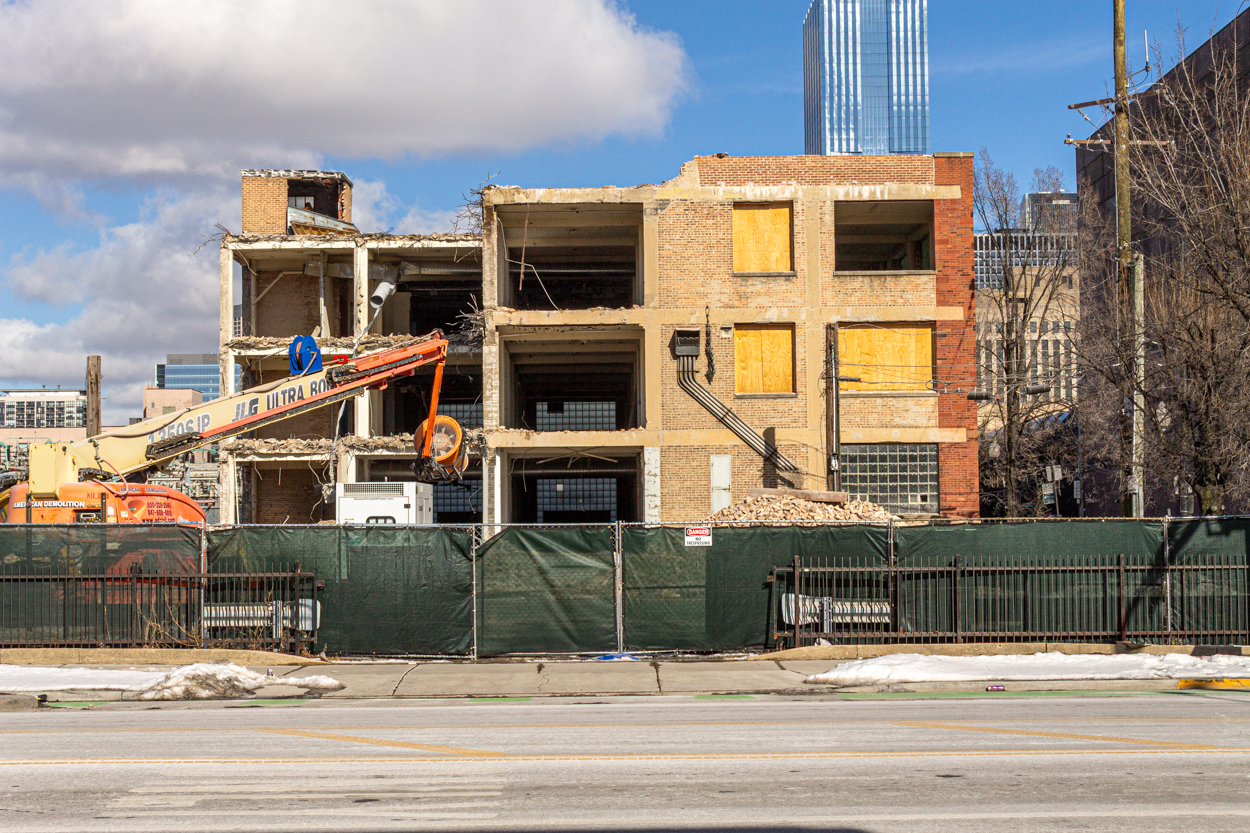
Photo by Daniel Schell
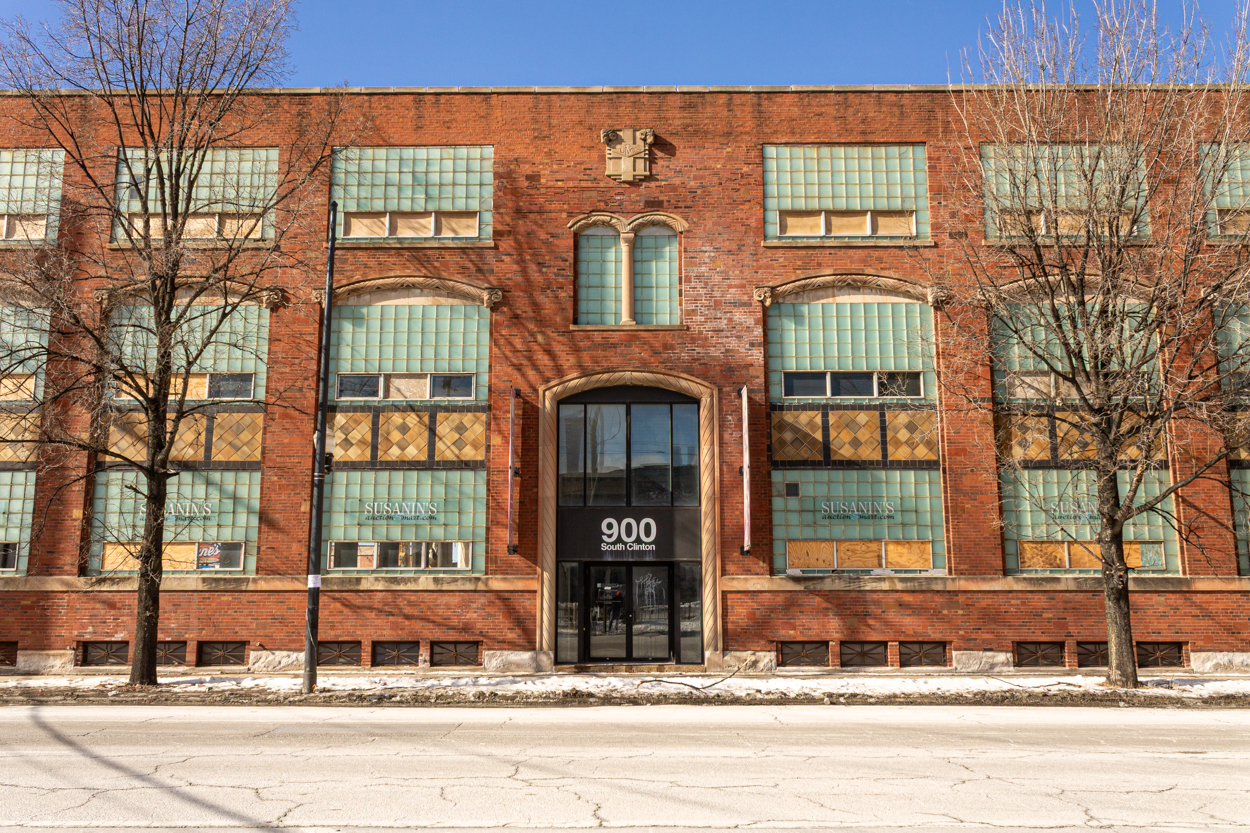
Photo by Daniel Schell
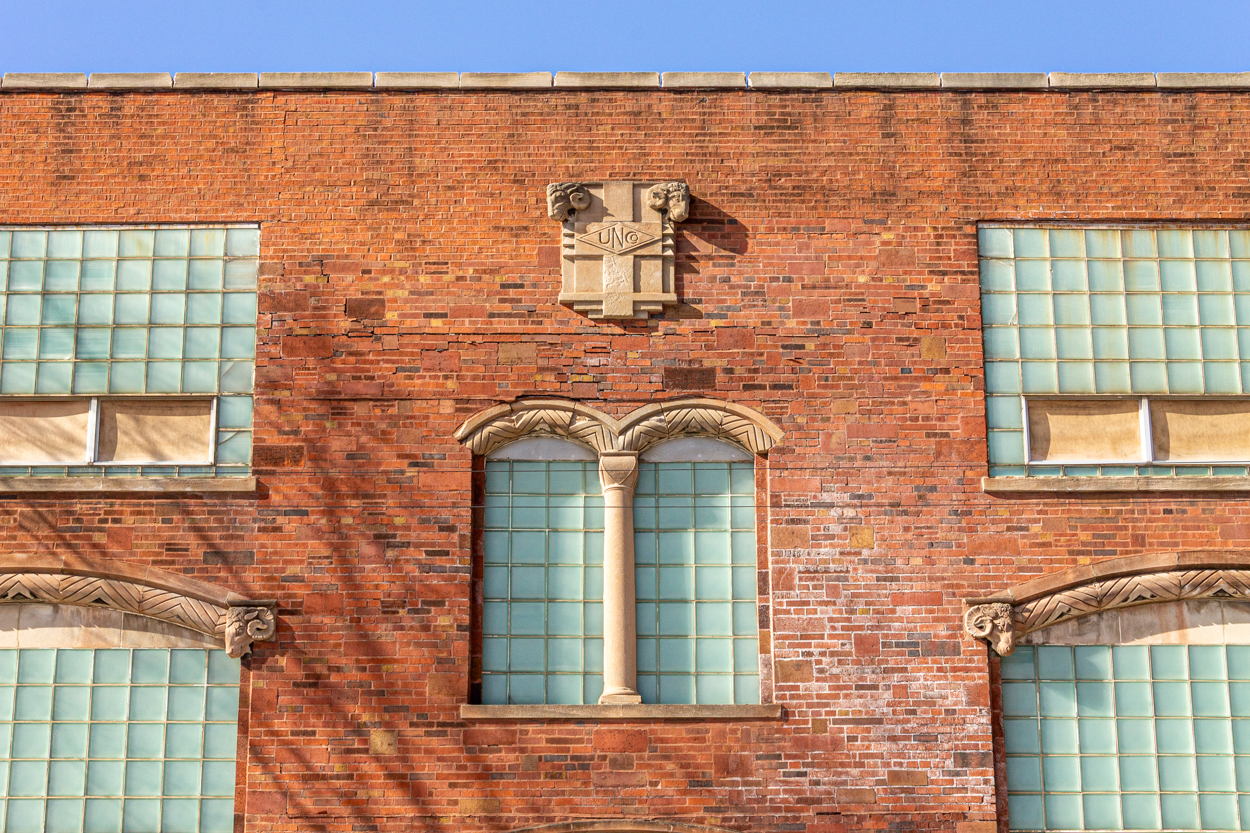
Photo by Daniel Schell
ComEd operates two distribution substations on nearby properties; one immediately north and one a block away on the west side of South Jefferson Street. They got a demolition permit in December to tear down another property they bought, the former Graf Air Fright building right around the corner at 550 West Taylor Street. Next to that lot, on the corner of Taylor and Jefferson, a new-construction Raising Cane’s restaurant was just opened. The rest of the block belongs to ComEd; not sure how the Cane’s property got away from them. The Graf Air building has since been razed.
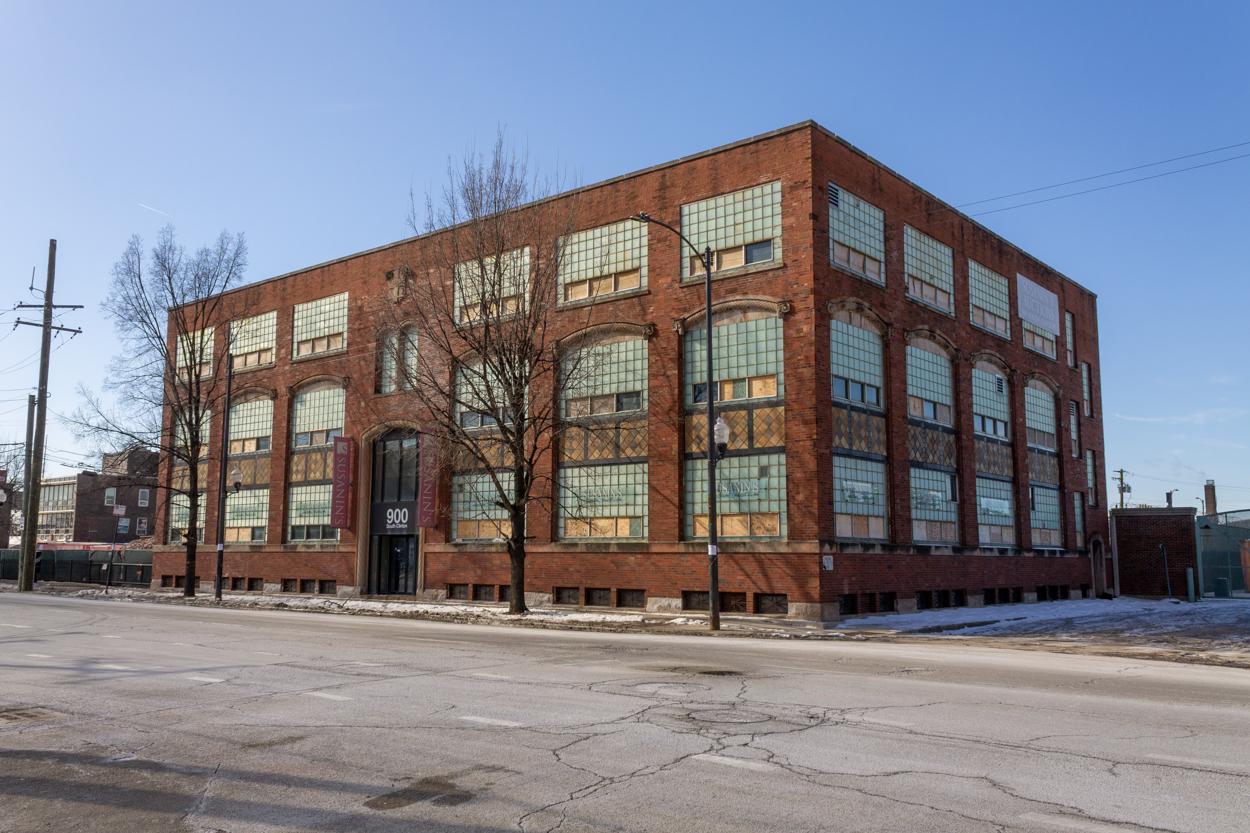
Photo by Daniel Schell
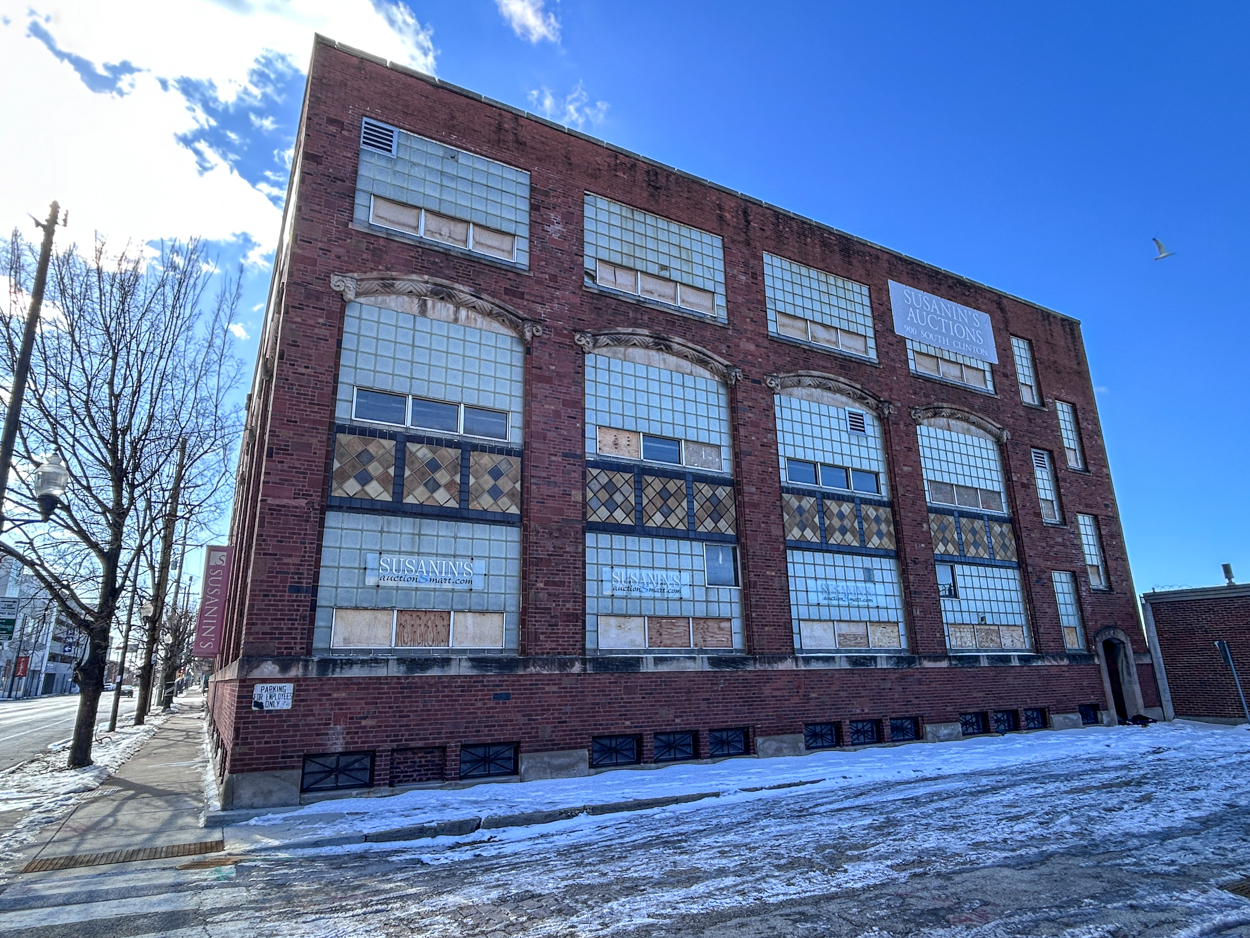
Photo by Daniel Schell
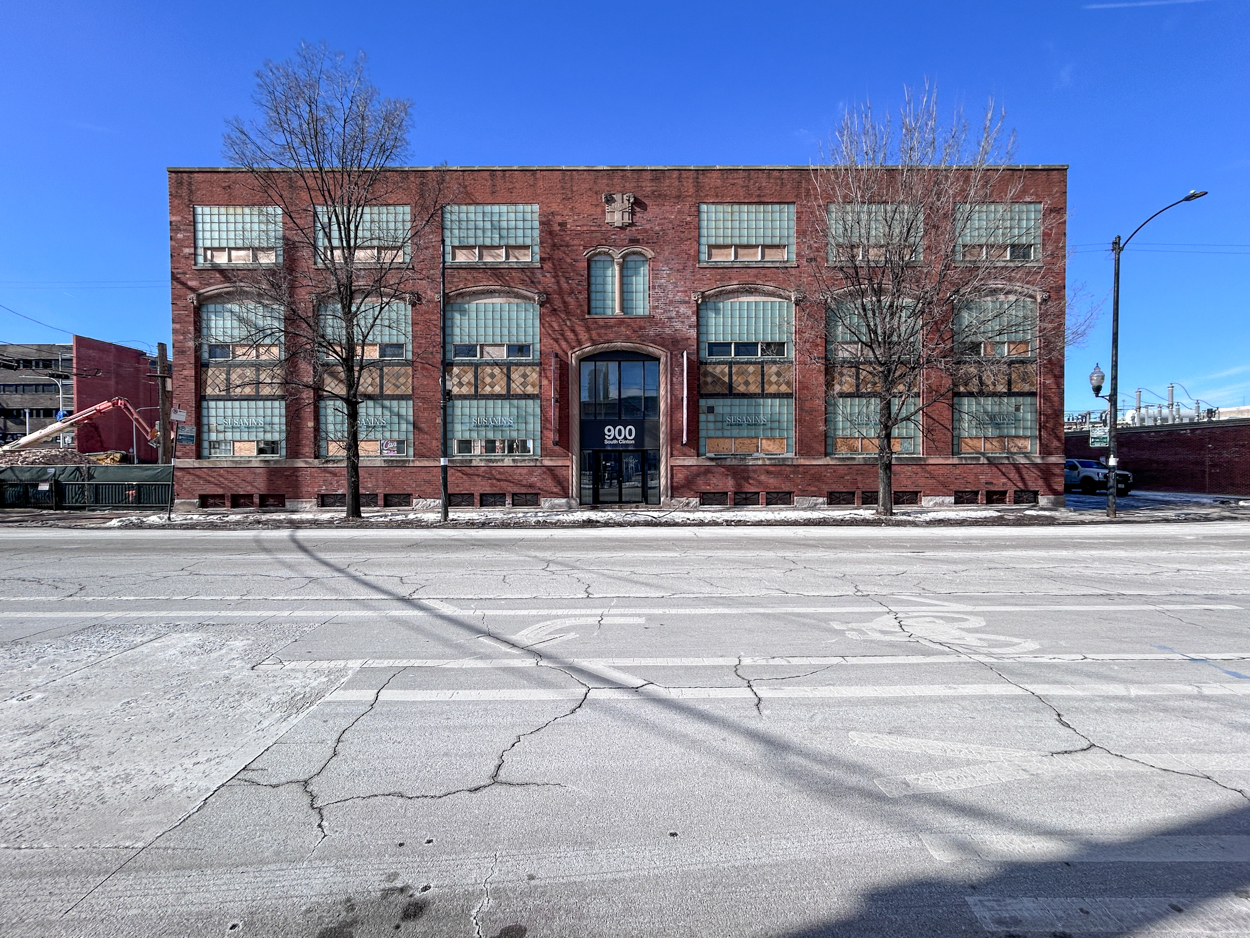
Photo by Daniel Schell
There have been no details released about ComEd’s plan for 900 Clinton and its neighboring lot along Taylor once demolition is complete. It could be a case of wanting the land vacant for future development.
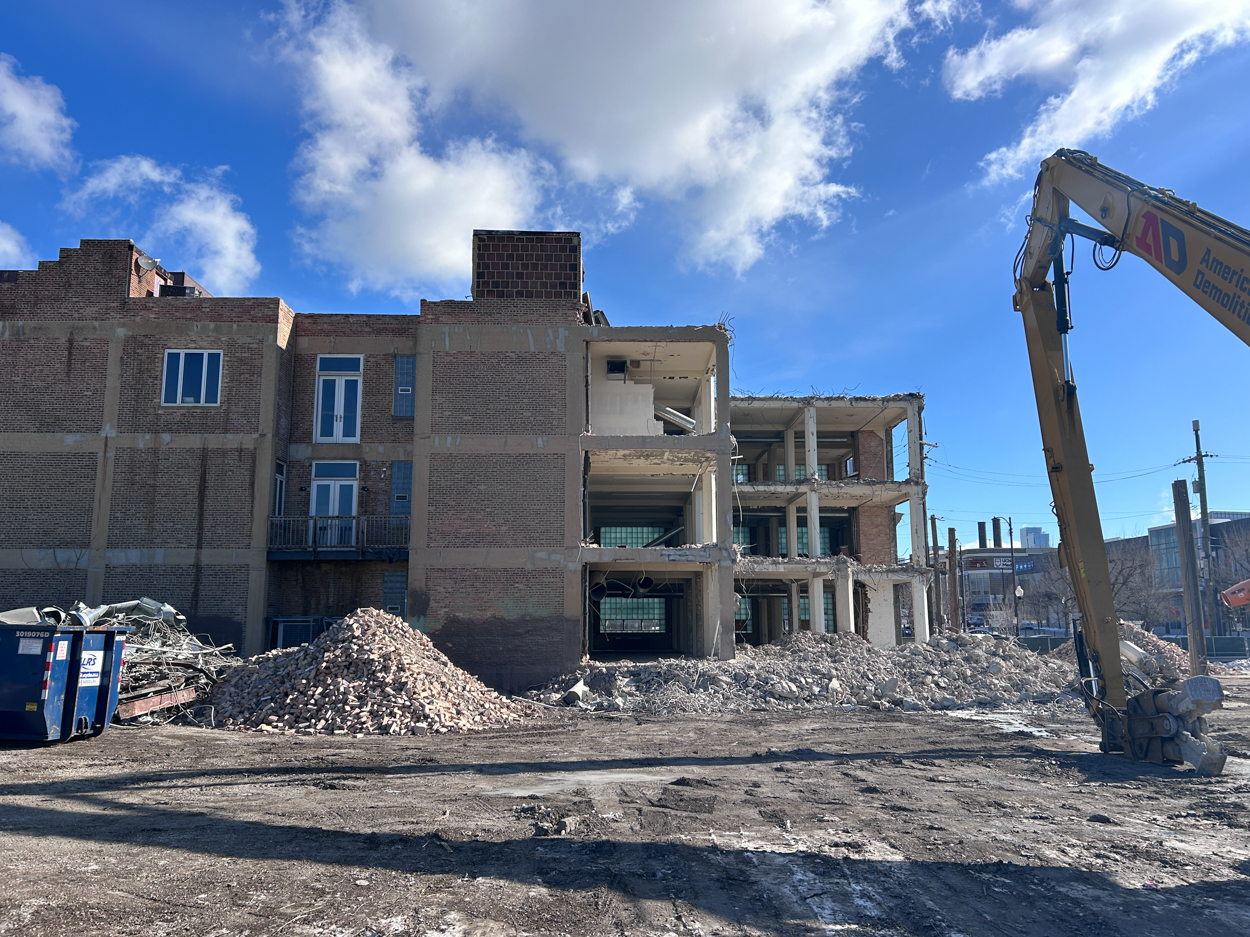
Photo by Daniel Schell
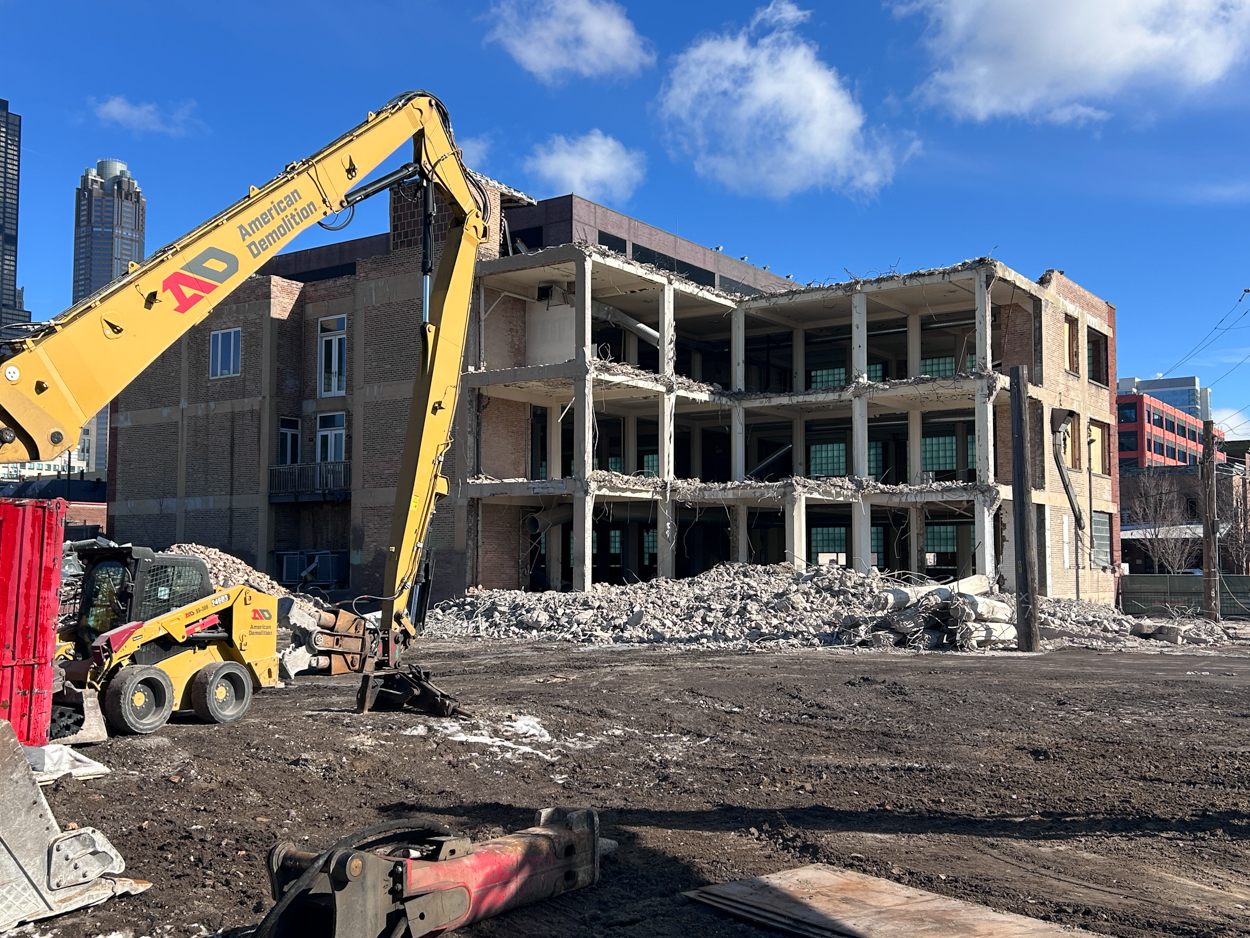
Photo by Daniel Schell
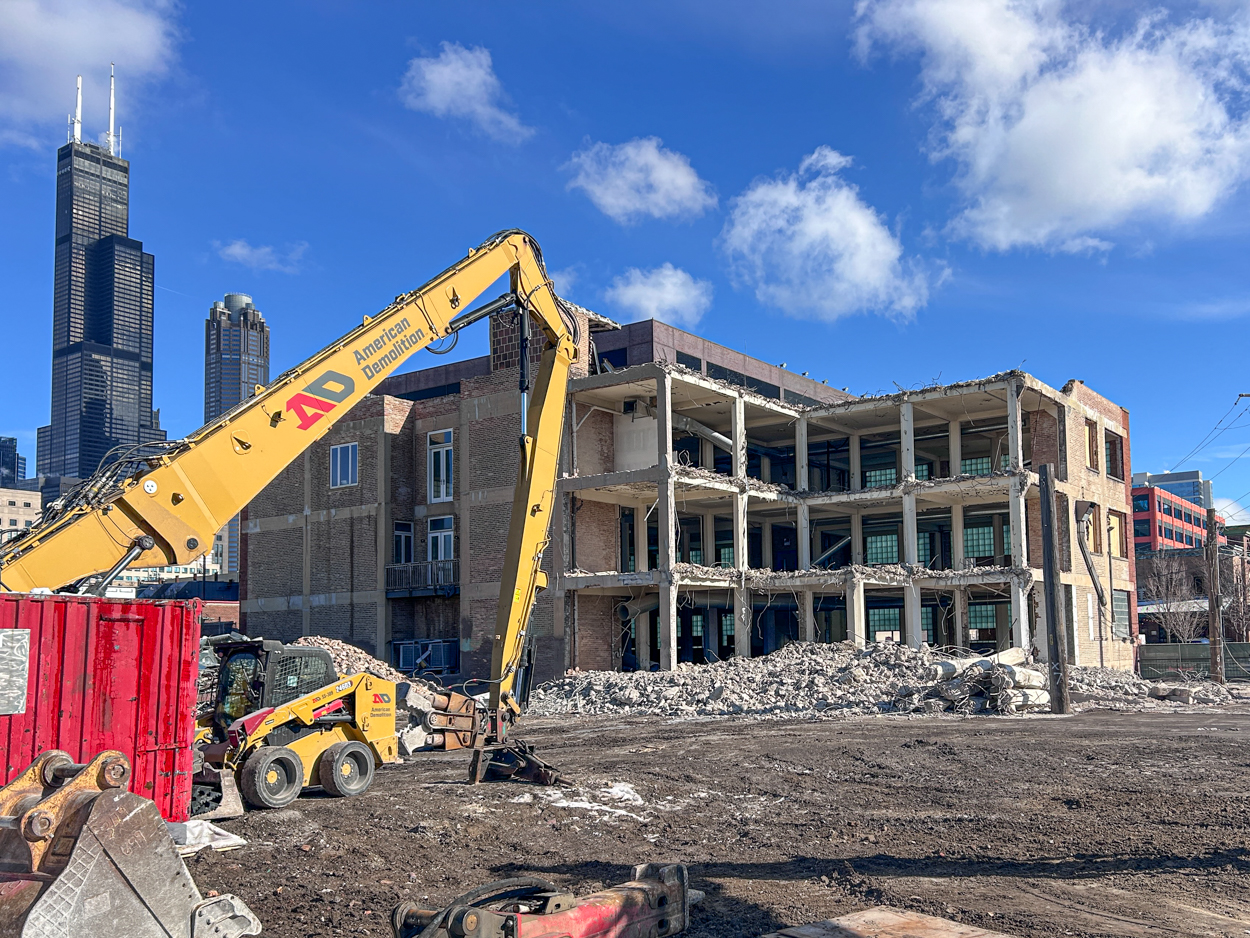
Photo by Daniel Schell
All photos were taken on February 7, just four days after the permit was issued. They must have gotten started before the ink dried.
Subscribe to YIMBY’s daily e-mail

Follow YIMBYgram for real-time photo updates
Like YIMBY on Facebook
Follow YIMBY’s Twitter for the latest in YIMBYnews
Was that necessary? Just continue to allow monolith companies strip away and destroy all things unique to Chicago.
It certainly doesn’t appear to have been, the building structure looks solid. It is sad, and when an area like this gets so barren, the stuff that replaces it (eventually) is usually car-oriented and pretty terrible because of low land values.
Low land values? Just the opposite; it’s the high land values so close to the loop that’s driving this demolition.
BTW – the building was solid. I’ve bought and sold at Susanin’s over the years and have been inside the 1st 2 floors. Pretty building, sorry to see it go.
Yes, if they want to consolidate substation gear from another site or expand with more gear.
Totally Agree. Could really have been something nice an uniquely Chicago
I foresee the Cane’s restaurant having horrible electrical outages in the future, until they decide to move. LOL
Save those little ram heads😭
I was walking along there one day a few years ago with our then-new young family dog, who’d been a stray in a rural area and was still adjusting to city life, and those little statues actually spooked him. One of his “WTF IS THAT?” moments like the first time we walked underneath an L train rolling by.
(He’s a total city pup now, pays no attention to either trains or sirens or weird-shaped statuary.)
Hope the glass bricks were saved..
It does look like a solid building and had a nice presence on the street. Too bad they could not just strip it down and mothball it for the future.
Oh nooooo a brick box with windows you can’t see out of is being demolished, how will this city ever recover.
Preservationists value the appearance of a building far more than the utility a building provides. It’s ridiculous, and it’s even more ridiculous to do that here since this building was rather bland and unremarkable.
You are wrong on so many levels, you just don’t understand what makes a city special and livable.
Destroy at all costs in the name of profit is what the new world order follows
This building was built for the Union News Company as a Chicago office for the New York-based news company. Clinton Street was widened from a narrow residential street around 1926 as this area shifted from residential to more industrial uses. The construction of the “Old” Chiacgo Post Office building contributed significantly to the area’s change in land use. While Arthington Street has since been reduced to a driveway for ComEd, it was historically a residential street and was named Forquer Street prior the 1920s.
Architect Ralph Varney, known more for his residential works on the North Shore, designed this building. It was completed in 1929-30 in cooperation with George S. Walter, of the Walter engineering Company, who contributed to the building’s reinforced concrete structural design. A brief article was published in the Chicago Tribune on April 14, 1929. The building is notable for its use of gazed tile in its spandrels, and for its irregular brick pattern, which includes various larger brick and terra cotta units. Originally, the window openings had sets of three double-hung windows with clear glass. It would have looked fairly for a printing building.
As for the site’s future, ComEd may be anticipating increasing demand for service, especially from new data centers. The site seems optimal for an expansion of their existing substation to the north.
I sure hope they won’t be building new substations. This area already feel so empty. We need to build residential buildings and public spaces to make this area nicer and livelier
The 19-story, 237-unit proposal for Polk & Jefferson would be a great start.