
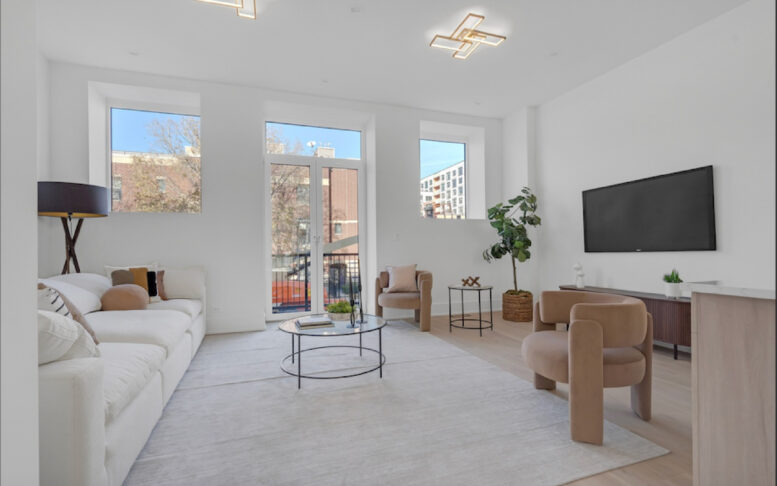
Interior build-outs are nearly complete for the residential conversion of the former Wayman African Methodist Episcopal Church at 509 West Elm Street in Cabrini Green. Located on the corner of North Cleveland Avenue, the project has been in the works for several years and is just one of multiple developments set to redevelop the entire block.
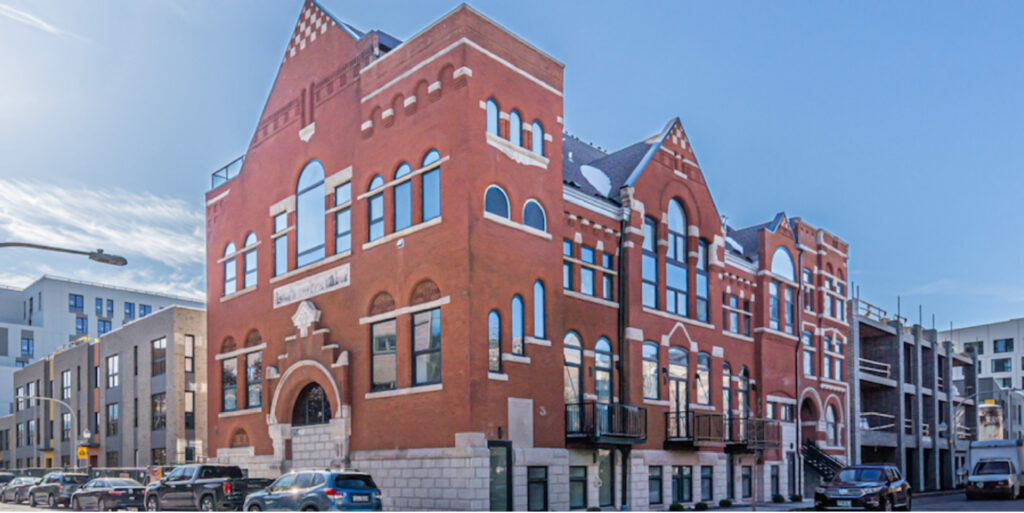
Image of 509 W Elm St via Compass
Originally built as the First Swedish Baptist Church in 1889, the roughly three-story, brick-clad structure served the local community for decades under various owners before being vacated and sold. Developer Cabrini LLC later brought on Hanna Architects to gut the interior and construct a small four-car garage topped by for-sale condos.
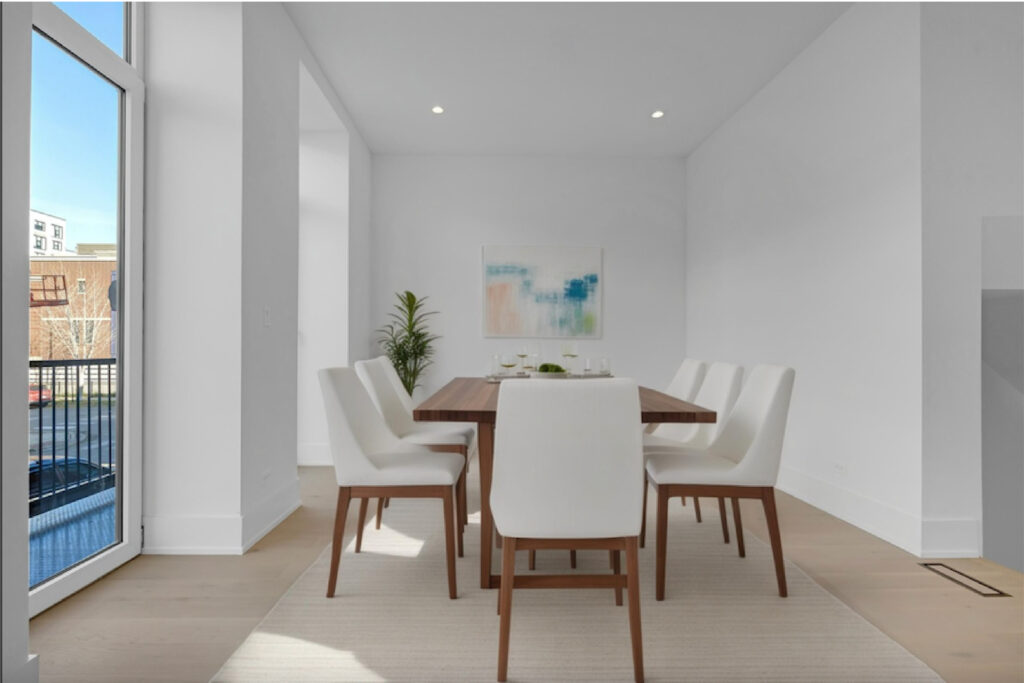
Rendering of 509 W Elm St by Hanna Architects
In total, the redevelopment includes seven units measuring over 2,000 square feet, with prices ranging from $1.05 million to $1.4 million per Crain’s. Each unit will feature a small balcony along with access to a shared rooftop deck. Additional parking is currently being built within the adjacent project at 515 West Elm Street, just west of the church.
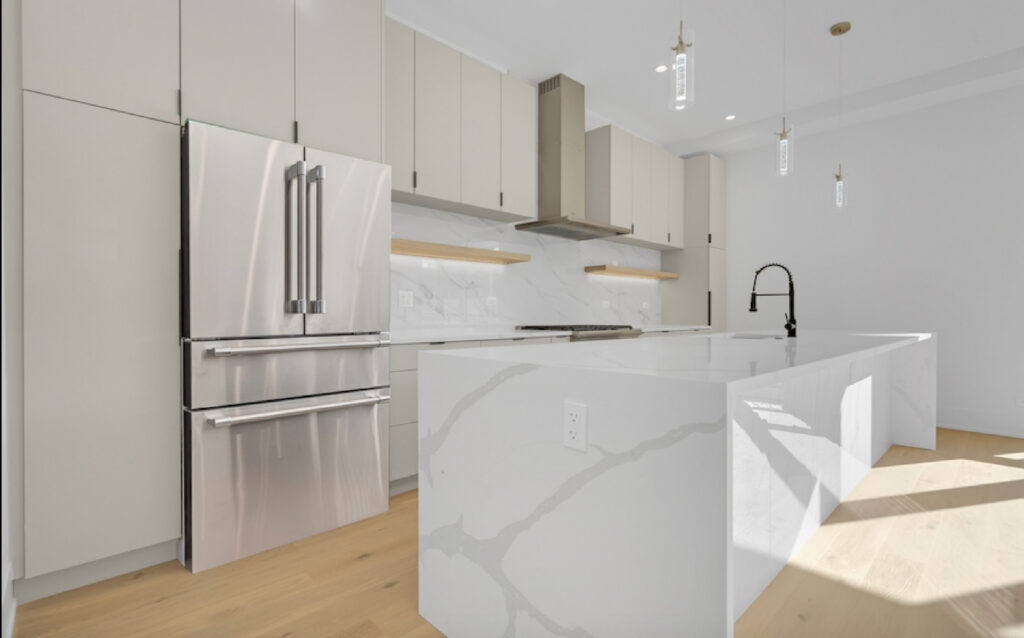
Rendering of 509 W Elm St by Hanna Architects
That neighboring development will rise five stories and is also nearing completion. It will include nine parking spaces and 12 rental units on the upper floors. Together, the two multi-million-dollar projects join Parkside Phase 3 in fully rehabilitating the mostly vacant site. Sales for the condos within the former church have begun.
Subscribe to YIMBY’s daily e-mail
Follow YIMBYgram for real-time photo updates
Like YIMBY on Facebook
Follow YIMBY’s Twitter for the latest in YIMBYnews
cool
Wow – $1.05 to $1.4 million to live in Cabrini Green?
Who’d of thought 40 years ago that people would pay that much to live in CG?
and if you told them that they’d probably imagine it as a much more dense and nice area but it’s still so sparsely populated
Love this project!
Glad the building survived (to some extent), but the bricked up front entrance really looks terrible. Hanna strikes again.
I think we can cut this one a little slack. Churches are some of the most difficult buildings to adapt for residential purposes. I’ll take a clunky, sealed off entrance over demolition any day.
I think it’s more that there were many ways to thoughtfully close up that entrance if it was limiting interior layout, & the chosen solution is exceptionally lazy & lacking creativity.
And it looks like they complied with the pointless balcony ordinance.
What is a pointless balcony ordinance?
I know this is YIMBY and I hope this isn’t misconstrued as NIMBY of me to say, but gentrification like this is terrible. $1M starting price point for a unit, in a church that used to serve a low-income neighborhood? This is why we have an affordable housing crisis, because all the land in the city is getting turned into places like these that low- and middle-income folks can’t afford.
Just a slight inversion of the causation here. The $1m price tag is the result of gentrification & the lack of development widely across the city. Very little (proportionally) of the land in the city is getting turned into anything, which is why those that are able to develop a prime site can charge a premium, which in turn increases the cost of renting or buying in the existing nearby housing stock.
Not completely true. There’s the additional cost of conversion of a church into residential which is more expensive per sqft than building from scratch. The developer can also charge a premium because of the building’s uniqueness.
I want to preface this by saying I’m not speaking on this specific project but gentrification as a whole. YIMBYs need to find a way to message the value of new developments in communities that have been neglected in the city for decades.
Tearing down housing, letting the lots sit vacant for years just to see luxury condos does not sit right with many of the long term residents. I’m not against these developments but the messaging from YIMBYs doesn’t sound like we care about the current and long term residents of these areas.
People do not want to be replaced or priced out of their own neighborhoods and the messaging should start with how this benefits the current residents, not appealing to new residents.
Then you’ll have to change property taxes to reflect what you paid for your building not what your neighbor paid for theirs. That’s a big ask for a system that’s been entrenched for decades. It would probably stifle growth since new construction would have to pick up the slack.
This church lost its congregation and could’ve bit the dust like other gorgeous old houses of worship. I am happy for the reuse of materials. This could’ve easily been a pile of rubble to make way for something much more lackluster. There are some questionable moves in the renovation, but I attribute them to limitations on architectural code requirements.
As for the project’s morality, the church chose to sell. We can be upset at the causation, but someone was brave and invested in the historic property rather than bulldozing it. Times change, the city’s needs adapt, it’s just life. How we got here is the bigger upset. Urban Renewal’s failure was an unsustainable product by design. So many promises and so many resources to take it all away, leaving a scar of empty land for decades.
Unfortunately, Chicago doesn’t have the money to replace the thousands of affordable units that once were. It’s simply not possible in our budget woes. We can fight politics, but it comes down to a city with no capacity to keep spreading itself thinner and thinner. New funding schemes come at a cost to potential new businesses and impose ever more burdens on an already overtaxed state. The companies don’t want it, families can’t afford it, and only the ridiculously wealthy can survive it.
Missing Middle initiatives for neighborhoods at 50% capacity or less need to be filled. Where the land is prime, cash in on the value and let those property taxes help fund other, more realistic projects. Gentrification is a beast. It’s great and awful at the same time. Don’t be overly aggressive; continue the affordability requirements, but don’t let developers throw money at a pool. Fix that loophole and get mixed-income projects in desirable areas. Chicago needs to vanquish its ownership of Cabrini Green. It’s going to be another 20 years before we see anything get built. This project is a middle finger to those who once called Cabrini Green Home, but not for the reason that luxury housing is taking over an old church.
Church saved, now housing, now paying property tax. Win win win.